Form & Technique
The Overhead Press: A Beginner's Form Guide
Learn how to overhead press with safe, correct form. Step-by-step setup, common mistakes, seated vs standing, and a dumbbell variation for beginners.
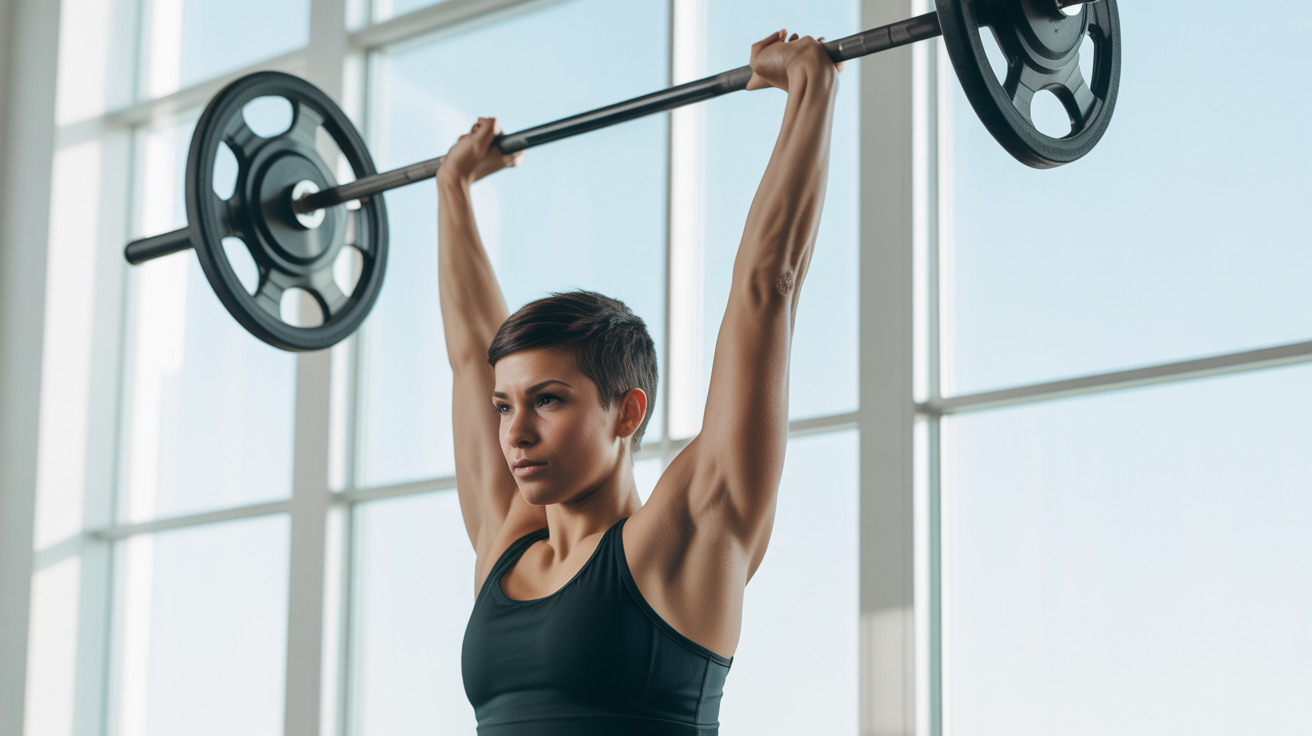
The overhead press is one of the most direct ways to build shoulder strength, and it's a staple in most beginner programs for good reason. Done with solid form, it trains the deltoids, upper traps, triceps, and core all at once. Done sloppily, it puts unnecessary stress on the lower back and shoulder joints. This guide walks through exactly how to do it right.
Equipment and Setup
You can overhead press with a barbell, dumbbells, or even a single kettlebell. A barbell lets you load heavier, track progress more precisely, and is the version most programs (like Starting Strength or StrongLifts) call for. Dumbbells allow more freedom at the shoulder and are a good starting point if you have any shoulder stiffness. Both are covered below.
For the barbell version, you need a squat rack or power rack with the J-hooks set at roughly collarbone height. Never attempt to clean a barbell overhead from the floor until you've learned that movement separately.
How to Overhead Press: Step-by-Step
This is the standing barbell overhead press. For the dumbbell and seated variations, see the sections below.
Grip and Hand Position
Take the bar with a grip just outside shoulder width. Your wrists should be stacked directly over the bar, not cocked back. Knuckles face up. A false grip (thumbs on the same side as fingers) is used by some advanced lifters, but beginners should use a full grip with thumbs wrapped around the bar for safety.
Rack Position
Unrack the bar and hold it at the top of your chest, just below your chin. Your elbows should be slightly in front of the bar, not pointed straight out to the sides. Think of the bar resting on your upper chest and front deltoids, not dangling from your hands.
The Press: Full Sequence
- Stand with feet about hip-width apart. Brace your core as if bracing for a punch to the stomach.
- Squeeze your glutes. This is not optional: glute tension creates a stable pelvis and prevents your lower back from hyperextending as the bar goes overhead.
- Take a breath into your belly, hold it (a Valsalva maneuver), and press the bar straight up.
- As the bar passes your forehead, move your head slightly back out of the path of the bar. Once the bar clears your head, move your head back through so that your ears are in line with your arms at the top. This is what coaches mean by "push your head through."
- At the top, arms are fully extended, bar is over the midfoot, and your body is in a straight line from heels to wrists.
- Lower the bar under control back to the rack position. Don't let it crash down. A slow, controlled descent protects the shoulder joint and builds more muscle.
Exhale as you finish the rep or between reps. For sets of 5, many lifters take a new breath each rep. For higher reps, you may exhale at the top and inhale before the next rep.
Common Mistakes and How to Fix Them
Leaning Back and Turning It Into an Incline Press
This is the most common fault. As the weight gets heavy, beginners hinge at the lower back and press on a backward angle instead of straight overhead. The result is a partial incline press rather than a true overhead press, and the lumbar spine takes a beating.
Fix: squeeze your glutes hard before the bar moves. A tight posterior chain resists the urge to arch. If you can't press the weight overhead without folding at the lower back, the weight is too heavy. Reduce it and build up.
A related cue: imagine a wall directly behind you. The bar should go straight up, not back into that wall.
Elbow Flare
Wide elbows at the start of the press put the shoulder in a vulnerable position. Start with elbows slightly in front of the bar, not flared to the sides like a push-up.
Pressing in Front of the Body
Some beginners press the bar forward instead of straight up, leaving the bar in front of their face at the top instead of over their head. This shifts load onto the front deltoid and reduces pressing efficiency. The bar should finish over the ears, not the nose.
Shrugging at the Top
At full lockout, shrug your traps upward slightly to elevate the scapulae. This is normal and healthy for shoulder mechanics at that range. It's different from pre-emptively shrugging before the bar moves.
Holding the Breath Too Long
On heavy singles this is fine, but for working sets of 5+, trying to hold one breath for a full set leads to dizziness. Reset your breath between reps.
Seated vs. Standing Overhead Press
Both are valid, and neither is strictly superior for beginners.
Standing trains the full kinetic chain. You must stabilize the core and hips, which makes it more demanding but also more functional. It's the version most strength programs use.
Seated removes the balance variable. If you're new to pressing, seated on a bench with a backrest (at 90 degrees, not angled back) can help you focus on the pressing movement itself without worrying about your stance. The backrest provides lumbar support, which some people find useful early on.
The main limitation of seated pressing: the vertical path is sometimes harder to achieve because the bench and backrest can interfere with technique depending on equipment. If seated, keep your back flat against the pad and avoid letting it serve as a crutch to arch into.
As you get stronger, working toward the standing version pays off. The core stabilization demand is part of what makes it worth doing.
The Dumbbell Overhead Press
The dumbbell version is shoulder-friendly and a solid choice if you have any history of shoulder discomfort. Because each arm moves independently, slight asymmetries get addressed over time rather than masked by a stronger side taking over.
Setup: sit on a bench with back support (or stand) holding a dumbbell in each hand at shoulder height, palms facing forward. Your elbows should be roughly at 90 degrees and slightly in front of your torso.
Press both dumbbells up and slightly inward so that they come close together at the top without clashing. Arms fully extended at the top, then lower under control. Brace and squeeze glutes the same way as with a barbell.
A neutral-grip dumbbell press (palms facing each other throughout) is gentler on the shoulder joint for lifters who feel discomfort with the palms-forward position. Both are legitimate options.
One downside: loading and tracking progress with dumbbells requires you to jump from one fixed weight to the next, which in most gyms means adding 5 lb per hand at a time. Progress is still very achievable but the jumps can feel large early on.
How Much Weight Should a Beginner Use?
Start with less than you think you need. The overhead press has a steep learning curve compared to the squat or the bench press because the bar is above your head and errors are less forgiving.
For most beginners, an empty 45 lb barbell or a pair of 10-15 lb dumbbells is a reasonable starting point to learn the movement pattern. Add weight only when you can complete all reps with the technique described above. The overhead press progresses more slowly than the deadlift or squat, so don't be discouraged by small jumps.
Safety Notes
Stop the set if you feel a sharp or pinching sensation in the shoulder joint. Mild fatigue in the muscle is expected; joint pain is not. If shoulder discomfort persists across multiple sessions, see a physiotherapist or sports medicine doctor before continuing. The overhead press is safe when loaded appropriately, but it is an exercise where ego-loading causes real injuries.
Frequently Asked Questions
How is the overhead press different from a behind-the-neck press?
The behind-the-neck press (lowering the bar behind the head) puts the shoulder in an externally rotated, impinged position for many people and is associated with higher injury risk. Most coaches, and most beginner programs, recommend the standard overhead press where the bar moves in front of your head.
Can I overhead press if I have shoulder problems?
That depends on the nature of the problem. Many people with mild shoulder tightness do fine with dumbbells in a neutral grip. Anyone with a diagnosed rotator cuff issue, impingement, or labral pathology should get clearance from a physiotherapist first. Don't self-diagnose and push through sharp pain.
Why is my overhead press so much weaker than my bench press?
This is universal. The overhead press uses a smaller range of muscles and a more mechanically disadvantaged position than the bench press, so lower numbers are normal. Expect your overhead press to be roughly 60-70% of your bench press in the early stages of training.
Should I use a belt for overhead pressing?
A belt can help with heavy sets by allowing you to brace harder. For beginners learning the movement, it's unnecessary and can give a false sense of lumbar support. Learn to brace without one first.
How often should beginners overhead press?
Most beginner linear progression programs include the overhead press two to three times per week, often alternating it with the bench press. This frequency allows enough practice to build motor patterns while allowing adequate recovery. Recovery matters more than you might expect because the shoulders are involved in nearly every upper-body lift.