Form & Technique
How to Bench Press With Good Form
Learn how to bench press safely as a beginner. Step-by-step setup, press path, common mistakes, and critical spotter advice for the barbell and dumbbell bench.
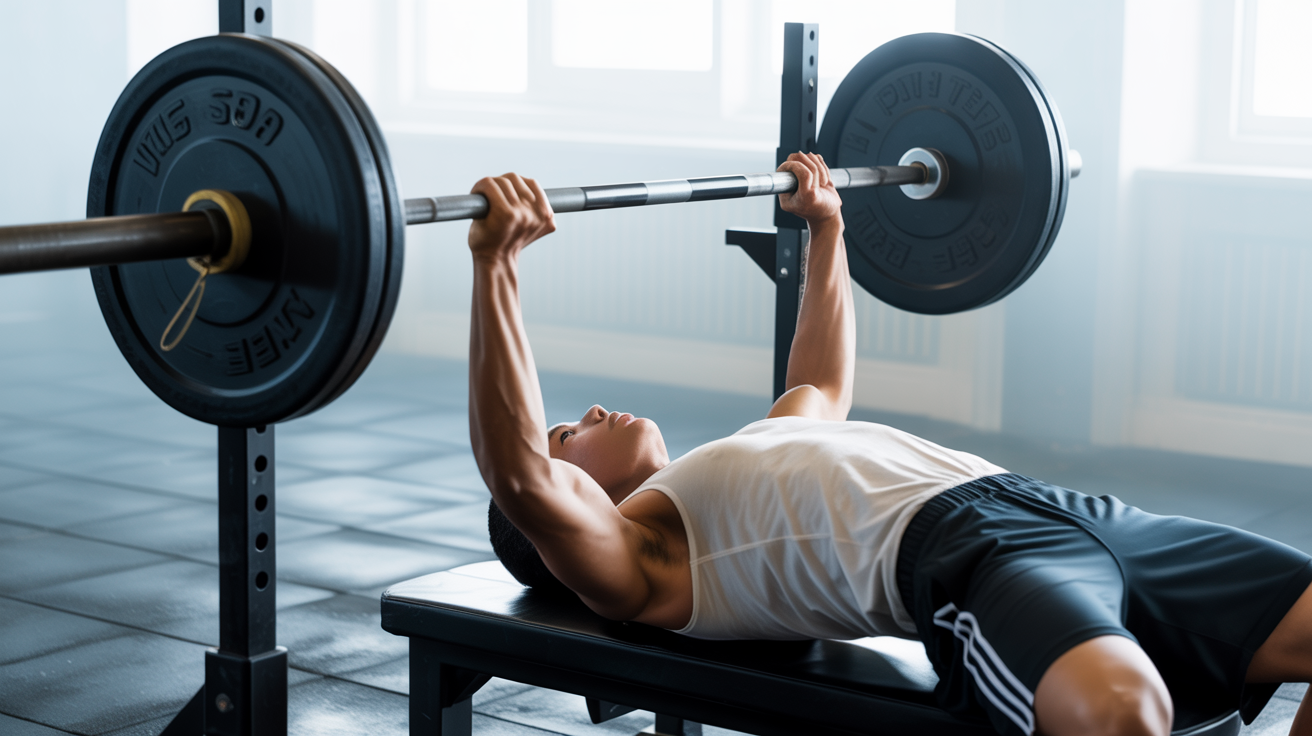
The bench press is straightforward once you know the setup. Done correctly, it builds your chest, shoulders, and triceps. Done carelessly, it can pin 135 pounds across your throat. This guide covers both how to press and how to keep yourself safe doing it.
The Safety Issue You Need to Understand First
Before technique: the barbell bench press is the only beginner lift where a missed rep can injure or kill you. If the bar comes down and you cannot press it back up, it will land on your chest or neck.
Always use one of these three options:
- A human spotter standing behind the bar, ready to grab it if you fail
- Adjustable safety arms (safeties) on a power rack, set just below your chest so the bar can rest there if you fail
- Dumbbells, which you can simply drop to the sides if you reach failure
If you are training alone and your gym has no power rack with safety arms, use dumbbells. This is not optional. The dumbbell variation builds the same muscles and has no entrapment risk.
Setting Up for the Barbell Bench Press
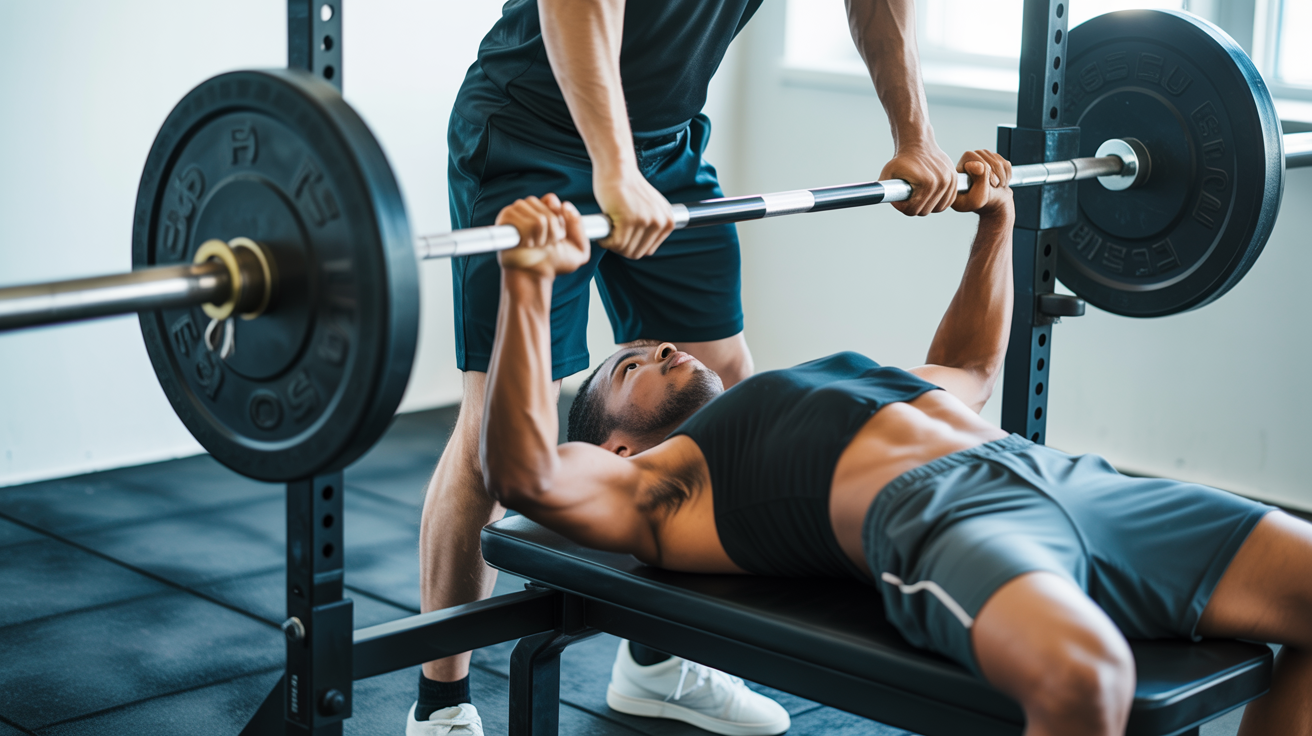
Good setup does most of the work. Skipping it puts unnecessary strain on your shoulders and makes you weaker in the press.
Step-by-Step Setup
- Lie flat on the bench with your eyes directly under the bar. Your grip should allow a straight vertical press without the bar grazing the uprights.
- Plant your feet flat on the floor. Feet should be roughly under your knees, not tucked back or extended forward. A stable base connects the whole chain.
- Retract your shoulder blades. Pull them together and down, as if you were trying to pinch a pencil between them. Hold this position throughout the set. This protects your rotator cuff and gives your chest a stable platform to press from.
- Create a slight natural arch in your lower back. You should be able to slide a flat hand under your lumbar spine, but not a fist. This arch is structural, not performance theater. Your glutes stay on the bench.
- Grip the bar with your hands slightly wider than shoulder width. A narrower grip shifts load to the triceps; wider brings in more chest. For most beginners, a grip where your forearms are vertical when the bar is at your chest is a good starting point. Wrap your thumbs fully around the bar, no false grip (thumbless).
- Unrack the bar by locking out your elbows and moving it horizontally over your lower chest before descending. Do not press it out at an angle from the hooks.
The Press Path
Where the bar travels matters more than most beginners realize. A straight up-and-down path is not actually optimal and often irritates the shoulders.
Descent
Lower the bar to your mid-to-lower chest, roughly at nipple level. The bar should travel in a very slight diagonal, touching a point lower than where it started overhead. Take two to three seconds on the way down. Control, not gravity, lowers the bar.
Elbow angle: Keep your elbows at roughly 45 degrees from your torso, not flared out to 90 degrees. Flared elbows (creating a "T" shape with your arms) loads the shoulder joint in a vulnerable position. The 45-degree tuck keeps the shoulder in a stronger, safer line.
The Pause and Press
Touch the bar to your chest with light contact. Do not bounce it off your sternum, that just transfers momentum to the bar and removes tension from your muscles. A brief pause at the bottom is fine and actually builds more strength over time.
Press the bar back up along the same slight diagonal path, finishing with the bar over your lower chest or upper abs, arms locked out. Squeeze your chest at the top. Breathe in on the way down, breathe out as you press.
Common Mistakes and How to Fix Them
Flaring the Elbows
Elbows pointed out to the sides at 90 degrees is the most common error, and the one most likely to cause a shoulder impingement over time. Fix: before each set, consciously think "elbows at 45," then check your actual position in a mirror or ask someone to watch.
Bouncing the Bar
Bouncing lets you use heavier weight, but the load bypasses your muscles at the most important moment. It also risks cracking a rib if your timing is off. Touch, pause briefly, press.
Losing Shoulder Blade Tension Mid-Set
When you fatigue, the shoulder blades tend to slide forward (protract), which shortens the effective range of motion and places the shoulder in a weaker position. If you cannot maintain the retracted position, the weight is too heavy or the set is too long.
Uneven Pressing
If one side of the bar rises faster than the other, your dominant arm is taking over. Focus on driving both hands equally, and consider dropping the weight to reinforce the pattern.
Bar Drifting Too High
Some beginners press toward their face rather than straight up or slightly back toward the rack. This is inefficient and can be dangerous if you are near failure. Keep the bar path deliberate and consistent.
Dumbbell Bench Press: A Safer Starting Point
The dumbbell bench press builds the same muscles as the barbell version with one major practical advantage: if you fail a rep, you put the dumbbells down on the floor or drop them to the sides. There is no entrapment risk.
Setup is similar: lie flat, feet planted, shoulder blades retracted, slight arch. Hold a dumbbell in each hand at chest level, palms facing your feet, elbows at roughly 45 degrees from your torso.
Press: push the dumbbells up and very slightly inward until they are above your chest, arms extended. Lower them slowly, keeping control. A longer range of motion is possible with dumbbells because the plates do not hit your chest, you can lower the dumbbells a few inches below chest level, which increases the stretch on the pec.
Dumbbells also let each side work independently, which tends to expose and correct strength imbalances faster than the barbell. Many coaches recommend beginners start with dumbbells for this reason.
For more on foundational lower-body lifting alongside the bench, see the guides on how to squat with proper form and how to deadlift safely as a beginner. If you want to complete your upper-body pressing, the overhead press guide covers standing shoulder pressing with the same safety-first approach.
How to Progress
Beginners can add weight fairly fast at the start. A common approach is to add 5 pounds per session as long as you complete all reps with solid form. When progress stalls, reduce the weight increment or switch to weekly progression. Never add weight by sacrificing form.
Start lighter than you think you need to. A weight that feels easy the first week teaches you the movement pattern. A weight that is too heavy the first week teaches you bad habits and risks injury.
Track your sessions, weight, sets, and reps. Progress on paper keeps you honest and shows you when a plateau is real versus when you had a bad day.
Frequently Asked Questions
How wide should my grip be on the bench press?
A grip slightly wider than shoulder width, where your forearms are vertical when the bar touches your chest, works well for most people. Very wide grips put more stress on the pecs and can strain the shoulders; very narrow grips shift more work to the triceps. Start moderate and adjust if anything feels off in your wrists, elbows, or shoulders.
Should my back be flat on the bench?
A slight natural arch is normal and intentional. Your shoulder blades, upper back, and glutes stay in contact with the bench; only your lower back has the small gap. A large, exaggerated arch (common in powerlifting competition to shorten range of motion) is not necessary for general strength training.
Can I bench press without a spotter?
With dumbbells, yes. With a barbell, only if you have safety arms in a power rack set just below your chest. Without both of those, a failed rep on the barbell can be a serious emergency. Do not bench with a barbell alone without safeties.
My shoulders hurt when I bench press. What is causing it?
The most common causes are elbows flared too wide, bar path drifting too high (toward the face), or trying to use more weight than your current shoulder stability can handle. Reduce the weight, focus on the 45-degree elbow tuck, and make sure your shoulder blades are retracted and depressed before you press. If pain continues after correcting these, stop the movement and consult a healthcare professional.
How many sets and reps should a beginner do?
Three sets of five to eight reps is a practical starting range. Fewer than five reps tends to be more weight than beginners can handle safely while learning. More than eight to ten reps per set is fine for building muscle but makes it harder to maintain form as fatigue builds. Prioritize quality over volume, especially in the first few months.