Gear & Setup
What Shoes Should You Wear to Lift Weights?
The best shoes for lifting weights explained for beginners: flat soles, raised heels, and why your running shoes may be holding you back.
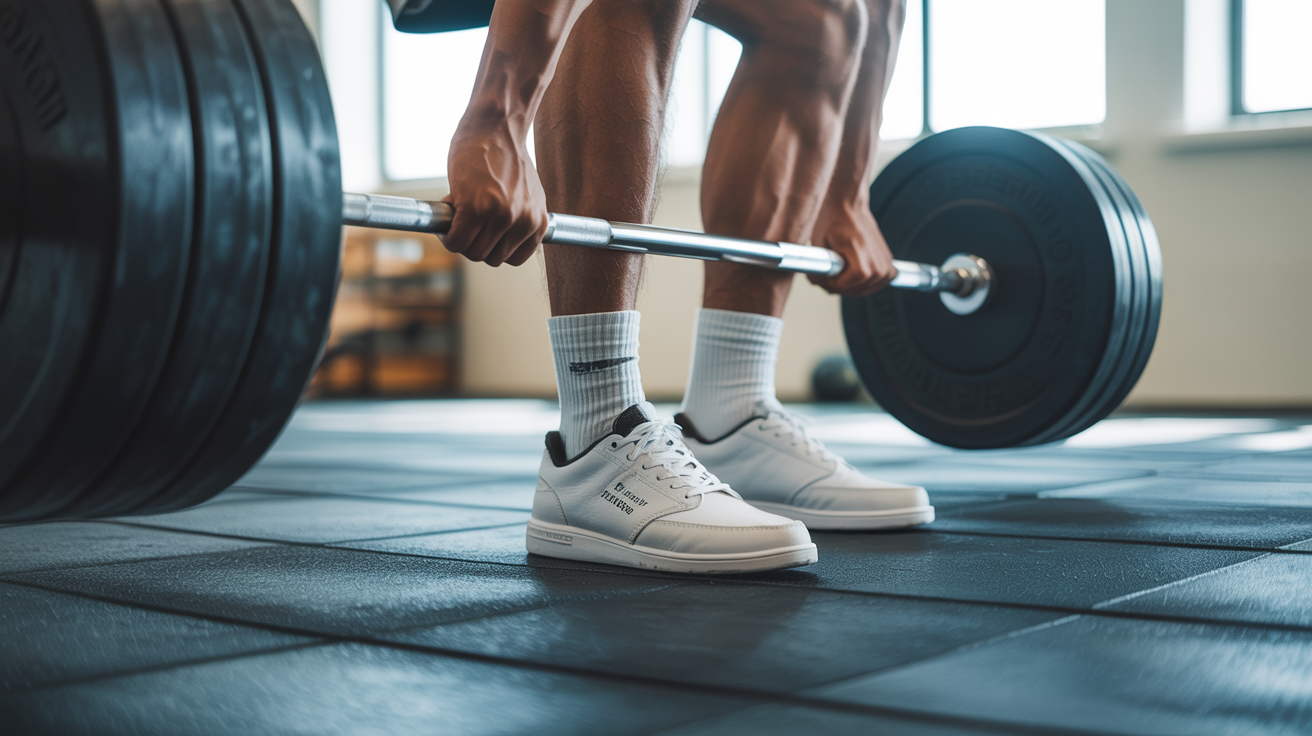
Most beginners spend a lot of time thinking about barbells, dumbbells, and programs before they give footwear a second thought. That makes sense. But the shoes you train in have a real effect on how stable you feel during squats, deadlifts, and presses, and on how well force transfers from your feet into the floor.
You do not need to spend a lot of money to get this right. Understanding a few basic principles will help you choose a shoe that works well, whether you are training in a commercial gym or putting together a home gym setup.
At a Glance
- Flat, firm-soled shoes (canvas sneakers, minimalist trainers) are the right default for most beginners: cheap, stable, and honest about your actual mobility.
- Running shoes' thick, cushioned midsoles compress unevenly under a loaded squat or deadlift, which can shift your foot and cost you stability.
- Raised-heel weightlifting shoes (roughly 15 to 25mm) help with limited ankle mobility or competitive lifting, but they're a second purchase, not a first one.
- A published biomechanics review found weightlifting shoes reduce forward trunk lean and increase ankle range of motion compared with running shoes or bare feet during a back squat.
- For deadlifts, thinner soles are almost always better since every millimeter under your foot is extra bar travel.
- Test your current shoes with the three-point check below before buying anything new.
Why Shoe Choice Matters for Lifting
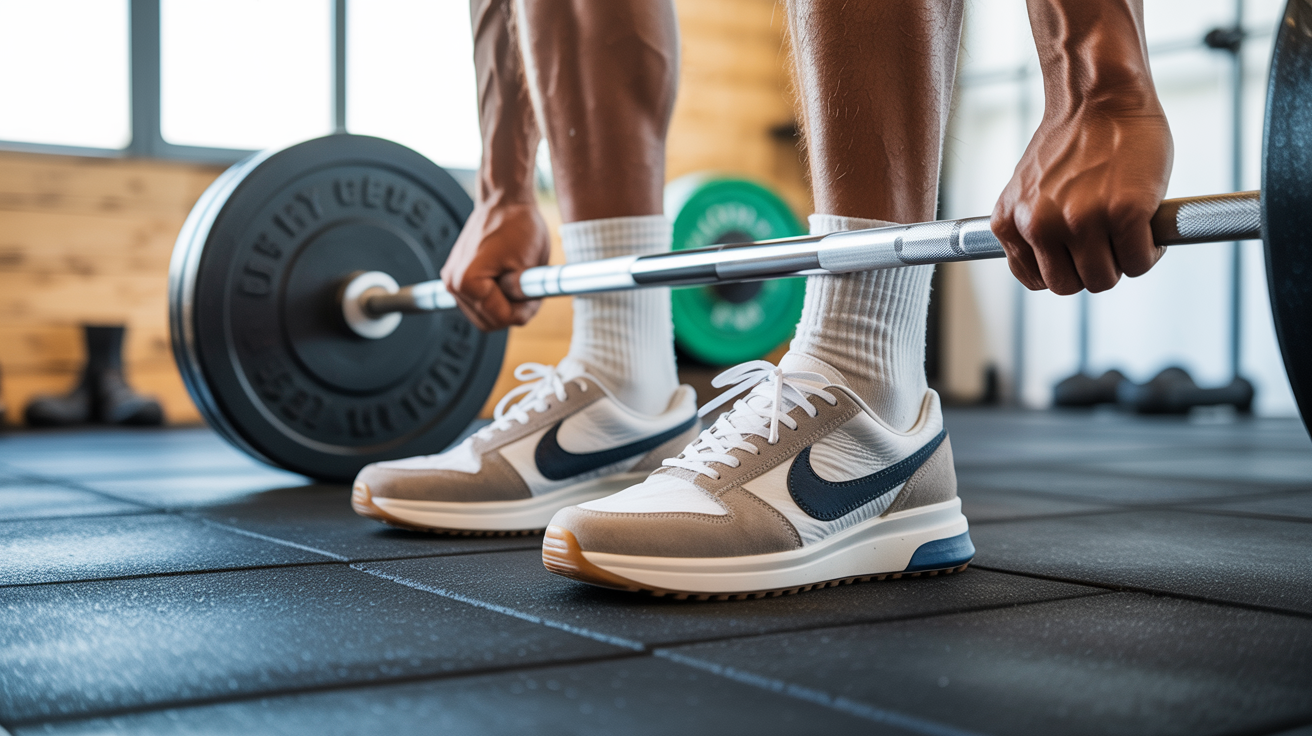
When you squat or deadlift, you are trying to push force straight down into the floor. A stable, firm base underfoot makes that easier. It also gives your ankle and foot something solid to push against.
Running shoes are designed with thick, cushioned midsoles. That cushioning is great for absorbing impact while jogging, but it works against you during strength training. When you squat heavy, that soft foam compresses unevenly. Your foot can shift slightly. Your ankle has to compensate. Over time that means less control and more energy leaking out of each rep rather than going into the bar.
The further from the floor your foot is, the harder it is to feel what your foot is doing and to stay balanced. This is especially noticeable during barbell squats, Romanian deadlifts, and any standing press.
A systematic review of fourteen peer-reviewed studies on footwear and the barbell back squat found that shoe choice measurably changes squat mechanics: dedicated weightlifting shoes reduced how far lifters leaned forward and allowed a greater degree of ankle motion compared with running shoes or lifting barefoot (Pangan and Leineweber, 2021). The review also noted that a simple heel wedge under a flat shoe produced comparable effects to a full weightlifting shoe, which is useful if you want to test the idea cheaply before buying dedicated footwear.
The Case for Flat, Firm-Soled Shoes
For most beginners, a flat shoe with a firm, non-compressible sole is the best starting point. It puts your foot close to the floor, gives you a stable platform, and costs a lot less than specialty lifting shoes.
Good options in this category include classic canvas sneakers, minimalist training shoes, and some cross-trainers marketed specifically for gym work. What you are looking for:
- Sole thickness under about 10mm. Thinner is generally better for feeling the floor.
- No or very little heel drop. Heel drop is the height difference between the heel and the toe of the shoe. Running shoes often have 8 to 12mm of drop. For lifting, closer to zero is better.
- A firm, non-compressible midsole. Press your thumb hard into the heel. If it sinks in noticeably, the shoe is too soft for lifting.
- A wide, flat toe box. Your toes should be able to splay slightly when you brace for a heavy lift.
Brands like Converse Chuck Taylor All Stars, Vans Old Skools, and various minimalist training shoes from major athletic brands all fit this profile. Many are under 70 dollars and hold up well for years of gym use.
When Raised-Heel Weightlifting Shoes Make Sense
Specialty weightlifting shoes have a heel that is typically raised between 15mm and 25mm, made from a hard material like wood or dense plastic. That elevated heel allows your ankle to go through a greater range of motion during a squat, which lets you sit more upright and keep the bar over your midfoot more easily.
Research on this specifically backs up the beginner-relevant part of the story. A study comparing spinal loading during back squats in trained versus novice lifters found that novices carried significantly more stress at the L4/L5 vertebrae when squatting flat-footed, and that gap disappeared once the heel was elevated, while experienced lifters saw little added benefit from the elevated heel at all (Sayers et al., 2020). In other words, a heel raise appears to help newer lifters more than seasoned ones from a lower-back-strain standpoint, which is a useful data point but not by itself a reason to buy the shoes before you've built basic squat competence.
These shoes are genuinely useful, but they are not a beginner's first purchase. A few situations where they become worth considering:
You have limited ankle mobility. If your heels want to rise when you squat to depth, a heel raise temporarily compensates while you work on mobility. That said, addressing ankle mobility directly is usually the better long-term fix. A flat shoe with a heel wedge insert can serve as a lower-cost test before committing to dedicated lifting shoes.
You compete in Olympic weightlifting or powerlifting. These sports have specific equipment norms and the shoes are a legitimate tool for performance at that level.
You have been training consistently for several months and want to optimize your squat mechanics. At that point you know your movement patterns well enough to evaluate whether the heel raise actually helps you.
For most beginners working through the foundational movements for the first time, a flat shoe will serve you better. It forces honest ankle mobility work and gives you accurate feedback about your positioning.
Flat vs. Raised-Heel: Quick Reference
| Factor | Flat, firm-soled shoe | Raised-heel lifting shoe |
|---|---|---|
| Typical cost | Under $70 | $100–$200+ |
| Best for | Beginners, general strength work, deadlifts | Limited ankle mobility, Olympic lifting, powerlifting squats |
| Heel-to-toe drop | Zero to minimal | 15–25mm |
| Feedback on your mobility | High (exposes limitations) | Lower (compensates for limitations) |
| Versatility across lifts | High (squat, deadlift, press, general training) | Narrower (mainly squat-pattern lifts) |
| When to buy | Immediately, as your first pair | After a few months of consistent squatting |
What About Deadlifts Specifically?
For deadlifts, many experienced lifters actually prefer the thinnest, most minimal shoe possible, or even train in socks where gym policy allows. The logic is simple: every millimeter of sole between your foot and the floor is extra distance the bar has to travel. Over the course of a heavy pull, that adds up.
A flat canvas shoe works well. A dedicated deadlift slipper (a very thin, barely-there shoe) is a more specific tool some powerlifters use at competition. You do not need one to start, but knowing the principle helps: for pulling from the floor, less is more.
If you are building a home setup and looking at which equipment to prioritize first, footwear is a small investment that pays off quickly. For context on the bigger-picture gear decisions, see our guide to the best home gym equipment for beginners.
How to Evaluate What You Already Own
Before you buy anything, check the shoes you already have. Here is a quick test:
- Hold the shoe at the heel and toe and try to compress the heel with your thumb. Does it give significantly? That is cushioning that will compress under load.
- Place the shoe on a flat surface. Does it sit level, or does the heel sit clearly higher than the toe? Significant heel drop is a flag.
- Hold the shoe and try to twist it along its length. A very floppy, twisty sole offers less stability underfoot.
If you have a pair of classic canvas low-tops or a cross-trainer marketed for gym work, they may already pass this test. If all you own are cushioned running shoes, that is worth addressing before you start adding significant weight to your lifts.
For more guidance on building out a functional training setup piece by piece, the breakdown on adjustable dumbbells vs. a full set covers a similar cost-vs-utility decision-making process for equipment.
Frequently Asked Questions
Can you squat in running shoes?
You can, but it is not ideal. Running shoes have thick, cushioned midsoles designed to absorb impact, not to provide a stable base for heavy squats. Under load, the foam compresses unevenly and can cause your foot to shift slightly. For light practice or bodyweight squats, it is fine. As you add weight, switching to a firmer, flatter shoe makes a noticeable difference in stability and control.
Do I need to buy special weightlifting shoes to start training?
No. A flat, firm-soled shoe like a canvas sneaker or a purpose-made cross-trainer is all most beginners need. Dedicated weightlifting shoes with raised heels are a useful tool in specific situations, but they are not necessary when you are learning the basic movements.
What is heel drop and why does it matter?
Heel drop refers to the height difference between the heel and the forefoot of a shoe. Running shoes often have 8 to 12mm of heel drop. For lifting, lower drop is generally better because it keeps your foot closer to the floor and reduces the compression effect under load. Many lifting-appropriate shoes have zero or near-zero drop.
Are barefoot shoes good for lifting?
Minimalist or barefoot-style shoes with very thin, flexible soles can work well for deadlifts and other pulling movements where you want to be close to the floor. For heavy squats, some people find they want a little more structure underfoot. As with most gear questions, it depends on your movement patterns and what feels stable to you. If you are new to minimalist shoes, transition slowly since they change how your foot and calf muscles work.
How long should a pair of lifting shoes last?
A good flat-soled trainer used exclusively for lifting can last several years. The sole does not compress and wear the way a running shoe does because you are not repeatedly striking the ground while moving. Inspect the sole periodically for separation or wear, but with reasonable care these shoes hold up well over time.
Do raised-heel shoes actually make squats safer?
There's early research suggesting a benefit specifically for newer lifters: one study found novices had notably higher lower-back loading when squatting flat-footed compared to trained lifters, and that difference shrank once the heel was raised. That's a reasonable argument for trying a heel wedge if your form seems to break down at depth, but it's not a substitute for building ankle mobility and squat technique over time, and experienced lifters in that same study saw little extra benefit from the raised heel.