Gear & Setup
Adjustable Dumbbells vs. a Set: Which Should You Buy?
Adjustable dumbbells or a fixed set? Here's a plain-English breakdown of cost, space, durability, and what actually makes sense for beginners at home.
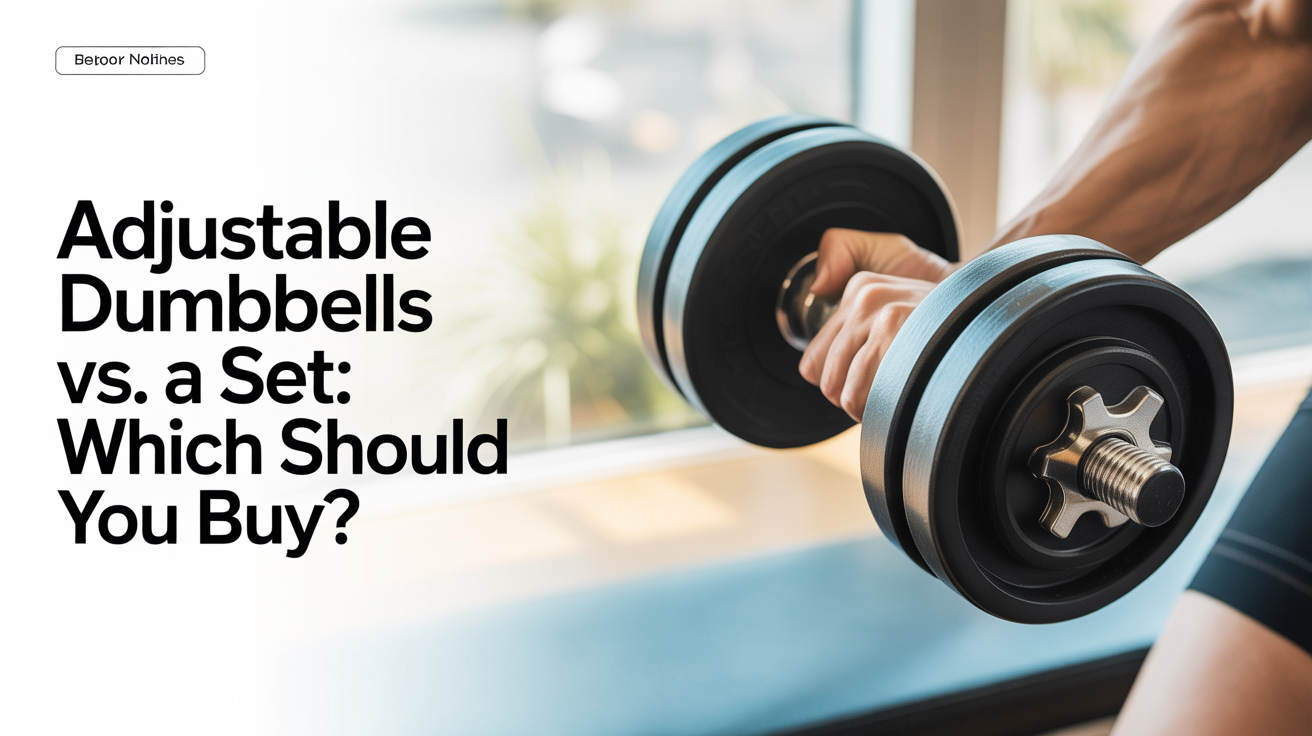
Most people agonizing over this decision are doing so in a spare bedroom or garage corner, not a commercial gym. That context matters, because it changes the answer significantly. For the majority of beginners training at home, adjustable dumbbells are the smarter starting point. But "most" isn't "all," so here's what you actually need to know to make the call.
At a Glance
- Most home beginners should buy adjustable dumbbells first: they cover a wide weight range in a small footprint at a lower total cost than a fixed set.
- Fixed hex dumbbells win on durability and grab-and-go speed, which matters more for circuits, coaches, or anyone with dedicated gym space.
- A pair topping out around 50 to 55 lbs covers most beginners for their first year of consistent training.
- Never drop an adjustable dumbbell; the internal mechanism, not the weight itself, is what fails.
- Public health guidance calls for muscle-strengthening work at least twice a week, and either dumbbell type satisfies that as long as you use it consistently.
- If budget allows later, a used fixed pair or two at your most-reached-for weights is a reasonable add-on, not a replacement.
What You're Really Choosing Between
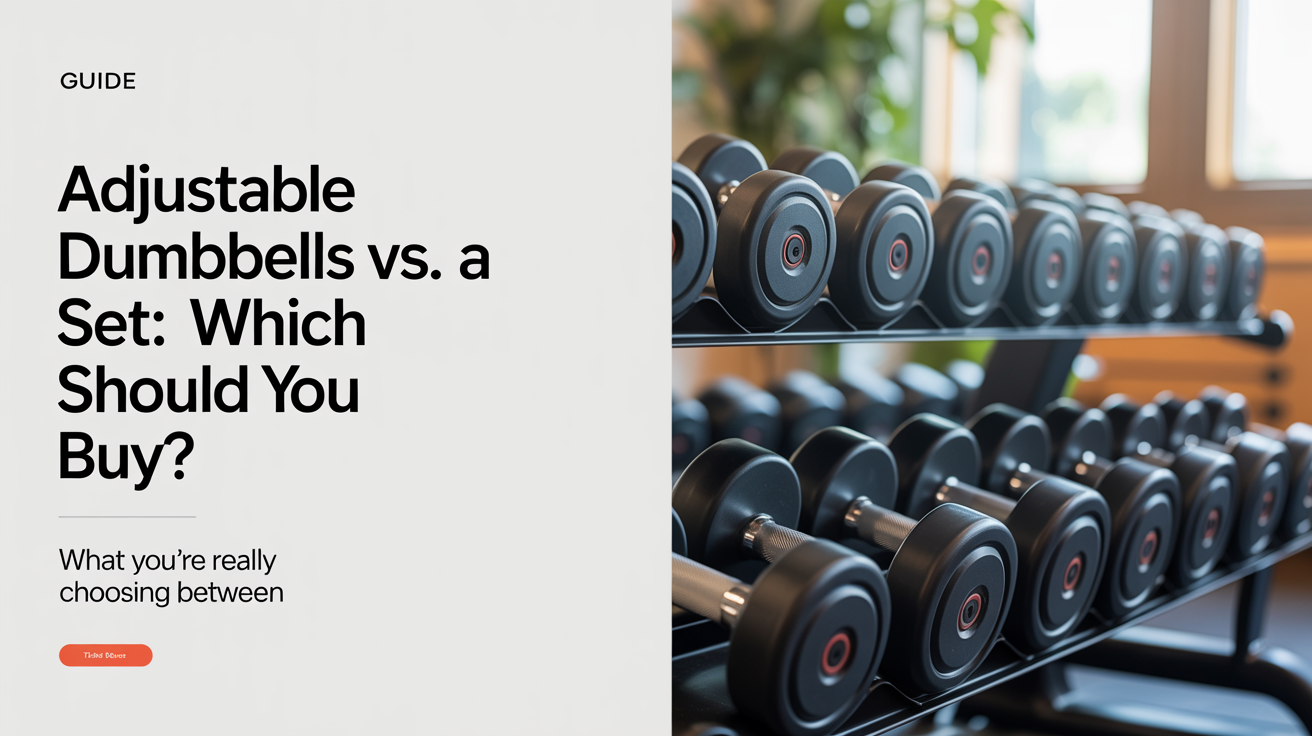
Dumbbells come in two flavors:
Adjustable dumbbells are a single handle (or pair of handles) with a mechanism to change the weight plate load. Dial-select models (like a round cartridge you twist) are the most popular. Pin-select versions look like miniature plate-loaded barbells. Both let you swap between weight increments without owning multiple pairs.
Fixed (or "hex") dumbbells are the individual cast-iron or rubber-coated weights you see in rows at every commercial gym. You buy one weight, or you buy a whole set covering a range, usually in 5 lb increments. They're called hex because of the six-sided head that stops them rolling.
A third option worth knowing: adjustable kettlebells. These are less common but use the same logic (one shell, swappable inserts). They're covered briefly below.
Adjustable Dumbbells: The Case For and Against
Where they win
Space. A pair of adjustable dumbbells replaces up to 15+ individual weights. For apartment dwellers or anyone without a dedicated gym room, that's not a minor convenience, it's often the deciding factor. They sit on a desk-sized footprint, roughly the size of two shoeboxes stacked side by side.
Cost per weight. Buying a fixed set from 5 to 50 lbs (the typical beginner range) means purchasing 10 pairs of dumbbells. The per-unit cost adds up fast. A single adjustable pair covering that same range typically costs far less than buying all those fixed pairs new, especially once you factor in a storage rack.
Room to grow. As a beginner, your strength will increase steadily in the first six to twelve months. A single adjustable pair can travel with you from 10 lb curls to 50 lb rows without you buying anything new. When you do add weight, the standard guidance is to bump load by roughly 2 to 10 percent once you can complete your target reps with one or two extra in reserve, which is exactly the kind of small step an adjustable dial allows and a fixed set often can't match.
Where they fall short
Speed of adjustment. Dial-select models take a few seconds. Not a big deal for most workouts, but if you're doing supersets or circuit training where you need to move immediately between weights, it adds friction. Fixed dumbbells are grab-and-go.
Durability under hard use. The internal mechanisms on adjustable dumbbells (dials, locking pins, weight selectors) are more complex than a solid chunk of iron. Dropping an adjustable dumbbell from height, or using it for ballistic movements like snatches or heavy cleans, can damage the mechanism, and most manufacturers won't cover impact damage under warranty. For standard strength training movements (curls, presses, rows, lunges), this is rarely an issue.
Not great for some exercises. Certain movements where the dumbbell gets gripped awkwardly or handled roughly, like dumbbell push-ups or exercises where the weight rests on the floor mid-set, work better with solid hex dumbbells.
Fixed Dumbbell Sets: The Case For and Against
Where they win
Durability. A rubber hex dumbbell is basically indestructible. You can drop it, throw it (please don't), leave it in a damp garage, and it'll outlast everything else in the room. Commercial gyms use fixed dumbbells for a reason: they survive years of daily abuse.
Convenience during workouts. No adjustments. You grab the weight you need. For coaches or trainers running group classes, or for anyone who does complex circuits, that grab-and-go simplicity is genuinely useful.
Better for explosive or ballistic work. If you're doing kettlebell-style swings with a dumbbell, heavy farmer carries, or any exercise where you're gripping the weight dynamically, a solid fixed head is more secure than a dial-select mechanism.
Where they fall short
Space. A full set from 5 to 50 lbs is a significant footprint. You need a proper rack, and racks take up wall space. In a small apartment or shared living space, this often isn't realistic.
Cost to cover a range. Buying new fixed dumbbells across a meaningful weight range is expensive. Used sets from marketplace apps (Facebook, Craigslist) are often available, which helps, but sourcing a full range in good condition takes time and effort.
Gaps between weights. Most fixed sets jump in 5 lb increments. A jump from 20 to 25 lbs is a 25 percent increase, which is a manageable step for a compound lift like a goblet squat but often too big a leap for a shoulder exercise like a lateral raise. Some adjustable models offer 2.5 lb steps instead, roughly a 10 to 15 percent increase at typical beginner loads, which matters early on when a 5 lb jump feels like a wall you keep hitting.
Side-by-Side Comparison
| Factor | Adjustable | Fixed Set |
|---|---|---|
| Space required | Very small (2 stands) | Large (full rack) |
| Cost for 5–50 lb range | Lower (one purchase) | Higher (10+ pairs) |
| Adjustment speed | Seconds (dial/pin) | Instant (grab) |
| Durability | Good for standard use | Excellent, nearly indestructible |
| Drop resistance | Low (avoid dropping) | High |
| Ballistic/explosive use | Not ideal | Better |
| Beginner-friendliness | High | Medium (unless pre-owned) |
| Portability | Easy to move | Heavy, cumbersome |
What Weight Range Do Beginners Actually Need?
This question deserves a direct answer. For most beginners:
- Women starting out: A range of roughly 5–30 lbs covers most movements comfortably. Upper body pressing and isolation work (lateral raises, front raises) will stay in the 5–15 lb range for a while. Rows, deadlifts, and goblet squats can climb to 25–40 lbs faster than expected.
- Men starting out: 10–50 lbs is a solid starting range. Leg-dominant movements and rows will use the heavier end quickly; shoulder isolation and arm exercises will stay lighter longer.
Here's how that typically breaks down by exercise once you're a few weeks in and moving with confident form:
| Exercise | Typical starting range (women) | Typical starting range (men) |
|---|---|---|
| Lateral raise | 3–8 lbs | 5–12 lbs |
| Bicep curl | 5–12 lbs | 10–20 lbs |
| Overhead press | 5–15 lbs | 10–25 lbs |
| Bent-over row | 8–20 lbs | 15–35 lbs |
| Goblet squat | 15–30 lbs | 25–45 lbs |
| Romanian deadlift | 15–35 lbs | 25–50 lbs |
These are starting points, not ceilings. Everyone's numbers move at a different pace depending on training history, body weight, and consistency.
The practical takeaway: you don't need 100 lb dumbbells on day one. A pair of adjustable dumbbells with a ceiling of 50–55 lbs will serve most beginners for at least the first year of consistent training, often longer. The bigger driver of progress isn't the dumbbell brand, it's whether you're showing up. Public health guidance from the federal Physical Activity Guidelines calls for muscle-strengthening activity, using weights, bands, or bodyweight, at least twice a week for adults. Either dumbbell type satisfies that as long as you actually use it.
If you're putting together a broader home setup, see how to build a home gym on a budget for a full equipment priority list and the best home gym equipment for beginners for a rounded starting kit.
A Brief Word on Adjustable Kettlebells
Adjustable kettlebells work on the same principle as adjustable dumbbells. They're useful if you want to incorporate kettlebell movements (swings, Turkish get-ups, goblet squats) without buying multiple individual kettlebells. The trade-off: they're even more sensitive to dropping than adjustable dumbbells, because the weight inserts sit loosely in a shell. For beginners who want both dumbbells and kettlebell-style training, an adjustable dumbbell pair plus one fixed kettlebell at a moderate weight (16–20 kg for most men, 8–12 kg for most women) is often more practical than trying to cover everything with adjustable kettlebells alone.
Who Should Buy What
Buy adjustable dumbbells if:
- You're training at home with limited floor space
- You want to cover a wide weight range without a major upfront purchase
- You're doing conventional strength exercises (presses, rows, curls, squats, lunges)
- You're just getting started and aren't sure yet what weights you'll need
Buy a fixed set if:
- You have dedicated gym space and a proper rack
- You do high-intensity circuits or group workouts where fast swapping is important
- You can source a used set at a reasonable price
- You prioritize durability above all else
For most people reading this, beginners setting up at home, figuring out strength training for the first time, adjustable dumbbells are the practical pick. They're not flashier or more fun to use, but they solve the real problems: limited space, limited budget, and an uncertain sense of how strong you'll get and how fast. You can always add a fixed pair or two later for specific weights you reach for constantly.
Pairing dumbbells with a set of resistance bands extends your exercise options considerably without much additional cost. See do you need resistance bands? A beginner's buying guide for a breakdown.
Frequently Asked Questions
Are adjustable dumbbells worth it for beginners?
Yes, for most home beginners. The space savings alone justify the cost relative to buying a fixed set across the same weight range. They're not the right tool for every situation, but for a beginner doing standard strength movements at home, they're well-suited.
Can you drop adjustable dumbbells?
You should avoid it. The internal mechanisms (dials, selectors, locking pins) can be damaged by impact, and most manufacturers void the warranty on impact damage. For floor-based exercises or anything where the dumbbell might slip, use fixed weights or put down a thick mat and be careful.
What's the difference between dial-select and pin-select adjustable dumbbells?
Dial-select (like a round cartridge you twist at each end) are the most common and generally the fastest to adjust. Pin-select look like miniature barbell setups where you move a pin to choose the load, similar to a selectorized machine. Dial models tend to be more compact; pin models can feel sturdier and are often less expensive.
How long will adjustable dumbbells last?
With normal use (no dropping, kept dry, mechanism cleaned occasionally), a quality pair should last many years. The mechanisms are the vulnerability, not the weights themselves. Avoid using them for explosive or ballistic work to maximize lifespan.
Is it better to buy used fixed dumbbells than new adjustable ones?
If you can find a complete used set in good condition at a reasonable price, that's a legitimate option. Rubber hex dumbbells are durable and a used set is often significantly cheaper than new. The challenge is sourcing a full range in matching condition. If you can find 5–50 lbs in 5 lb increments locally at a fair price, it's worth considering, especially if you have the space for a rack.
How much should I increase the weight as I get stronger?
A workable rule, backed by resistance-training research on load progression, is to add roughly 2 to 10 percent once you can complete your target rep count with one or two reps left in the tank. In practice that's often a jump of about 2.5 to 5 lbs for upper body work and 5 to 10 lbs for leg and back exercises. Small, steady increases beat big jumps that wreck your form.
Do I need a full weight range from day one?
No. Start with what covers your first month of planned exercises and add from there. Adjustable dumbbells make this easy since you're not committing to a whole shelf of iron up front, you're buying one pair and dialing in the load as your program develops.