Gear & Setup
How to Build a Home Gym on a Budget
A practical, no-fluff guide to setting up a home gym for under $300—covering bodyweight, dumbbells, barbells, flooring, and buying used.
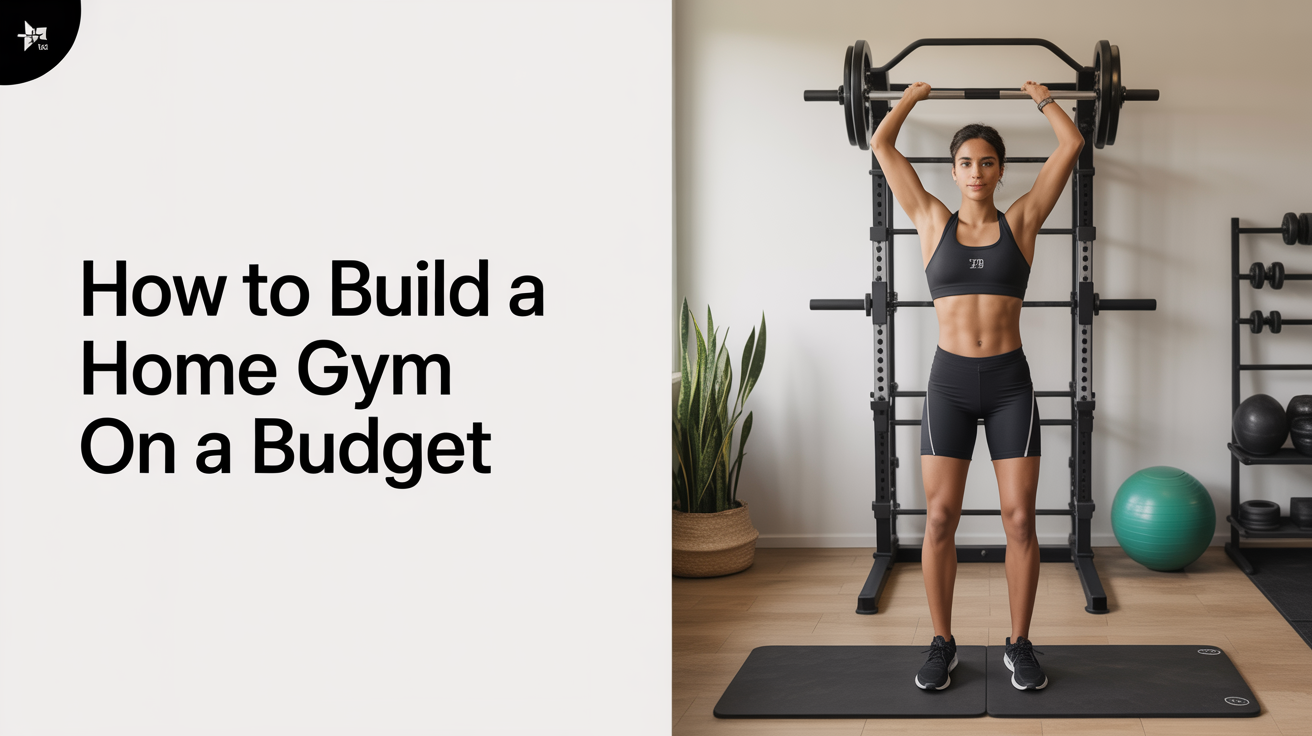
You don't need a squat rack and a cable machine to get strong. Most people who train consistently at home do it with a surprisingly short list of equipment. The goal here is to give you an honest look at what to buy first, what to add later, and what you can skip entirely.
Start With Nothing: Bodyweight Training
Before you spend a dollar, understand what your own bodyweight can do. Push-ups, squats, lunges, glute bridges, and planks build a real foundation. Add a pull-up bar mounted in a doorframe (around $25–$40) and you have a vertical pulling movement, which is otherwise hard to cover without equipment.
The case for starting here:
- Zero risk. If you stop, you're out almost nothing.
- You learn movement patterns before adding load.
- It works. Progressive push-up and squat variations can take a complete beginner well into intermediate territory.
What you actually need at this stage
A mat is the one purchase worth making immediately. A half-inch foam exercise mat costs $20–$35 and makes floor work, planks, bridges, stretching, noticeably more sustainable. Cheap mats from big-box stores are fine for this purpose.
That's it for tier one. A mat and a doorframe pull-up bar is a complete starting kit for many beginners.
The Cheapest Real Kit: Resistance Bands
Resistance bands are underrated for beginners. A set of loop bands (typically $15–$30 for five resistance levels) covers rows, face pulls, banded squats, hip thrusts, lateral walks, and pull-apart exercises that most people neglect.
They're also forgiving. Because the resistance increases as you stretch the band, the hardest point of a rep is at peak contraction rather than at a joint angle that might be risky. For a beginner learning movement patterns, that's a feature.
The limitation is progressive overload. You can only add resistance by moving up a band or combining two bands, and the increments aren't precise. For lower-body compound work especially, bands hit a ceiling relatively quickly.
If you want the full picture on whether bands are the right starting point for you, see Do You Need Resistance Bands? A Beginner's Buying Guide.
The Biggest Upgrade: Adjustable Dumbbells or a Full Set
This is where most people's home gyms actually start. Dumbbells cover nearly every muscle group and work for both hypertrophy and strength, making them the most versatile single purchase you can make.
Adjustable dumbbells
Dial-style adjustable dumbbells (like the Bowflex SelectTech style) typically run $250–$400 for a pair that goes up to 50–52 lbs. Spin-lock adjustable dumbbells, where you add weight plates by hand and tighten a collar, start around $60–$100 and are slower to change but much cheaper.
Adjustables make sense if you're short on space or budget. One pair replaces a full rack.
A fixed dumbbell set
Buying a small set of fixed dumbbells, say, three pairs at different weights, can be cheaper per pound than adjustables, especially secondhand. The tradeoff is space and the need to buy new pairs as you progress.
For a more detailed comparison, check out Adjustable Dumbbells vs. a Set: Which Should You Buy?.
The Step-Up: Bench, Barbell, and Plates
Once you're consistent and want to push heavier loads, a barbell and weight plates open up the most efficient strength movements: squats, deadlifts, overhead press, and bench press. These compound lifts let you add weight in small increments for years.
A flat utility bench
A basic flat bench costs $80–$150 new. It turns dumbbell presses into a more stable movement, adds incline options (on adjustable models), and is useful for step-ups, tricep dips, and Bulgarian split squats. You can skip it to start, but it earns its floor space quickly.
A barbell and plates
A standard 7-foot Olympic barbell costs $100–$200. A 300-lb Olympic weight set (barbell + plates) typically runs $250–$400 new. Buying a starter set rather than plates à la carte usually saves money per pound.
You don't need bumper plates unless you're doing Olympic lifts with drops. Standard iron plates are cheaper and quieter for most home programs.
A power rack or squat stands ($150–$400 new) become important if you're squatting or bench pressing with a barbell and training alone. Safety pins or spotter arms are not optional in that situation.
For a broader look at the gear that actually matters for beginners, see The Best Home Gym Equipment for Beginners.
Flooring
Flooring matters more than most people expect. Concrete is unforgiving on joints over time, and dropping or setting down weights on hardwood can cause real damage.
Horse stall mats (typically 3/4-inch rubber, 4×6 ft) cost $40–$55 each at farm supply stores. Two mats cover a 6×8 ft lifting area, which is enough for most home gyms. They're heavy (around 100 lbs each), dense, and durable. They're the standard recommendation for a reason.
Interlocking foam tiles are cheaper and easier to install but compress under heavy loads. They're fine for a mat-and-dumbbell setup; less ideal once a barbell gets involved.
If you rent, check your lease. A rubber mat sitting on hardwood is usually fine; bolted platforms obviously are not.
Buying Used: Where the Real Savings Are
The secondhand market for fitness equipment is consistently good, because people buy gear with good intentions and then stop using it. Craigslist, Facebook Marketplace, and OfferUp regularly have adjustable dumbbell sets, barbells, and benches at 30–60% below retail.
A few practical notes:
- Barbells: Check the sleeves (the rotating ends) for rust or rough spots. Light surface rust on the shaft is cosmetic and cleans off. Heavy corrosion or bent shafts are dealbreakers.
- Weight plates: Iron plates are iron plates. Used plates are essentially indistinguishable from new ones for home use.
- Benches: Check that the padding doesn't compress to nothing and that the frame doesn't wobble.
- Dumbbells: Fixed hex dumbbells used are one of the best buys in fitness equipment. They don't wear out.
The best time to find deals is January through March, when resolution gear floods the market, and again in late summer before people clear out garages.
Budget Tiers at a Glance
| Tier | What to Buy | Rough Cost | What You Can Train |
|---|---|---|---|
| Zero cost | Bodyweight exercises only | $0 | Push, squat, hinge, core |
| Starter | Mat + doorframe pull-up bar | $45–$75 | Full bodyweight program |
| Band kit | Starter tier + resistance band set | $60–$105 | Bodyweight + rows, pulls, hip work |
| Dumbbell setup | Band kit + adjustable dumbbells | $200–$450 | Nearly all muscle groups |
| Full home gym | Dumbbell setup + bench + barbell + plates | $500–$900 | Complete strength training |
| Full home gym (used) | Same, bought secondhand | $250–$500 | Complete strength training |
Note: ranges reflect new pricing at mid-2026 typical retail. Used pricing varies by market. Flooring adds $80–$120 for a basic lifting area.
Frequently Asked Questions
How much does it actually cost to build a decent home gym?
A functional home gym starts around $200–$300 if you focus on adjustable dumbbells and a mat. A setup that covers barbell training, bench, barbell, plates, and flooring, runs $500–$900 new, or closer to $300–$500 buying secondhand. You don't need to spend all of that at once. Most people start with one tier and add over time.
Is a barbell necessary for beginners?
No. A barbell is efficient and lets you lift very heavy, but beginners can make substantial progress with just dumbbells or bodyweight for the first several months. A barbell becomes worth considering once you've built a consistent habit and want to focus specifically on strength with big compound lifts.
Do I need a squat rack?
Only if you're barbell squatting or bench pressing alone. Without a rack, you can still deadlift, Romanian deadlift, overhead press, and do barbell rows safely. A basic squat stand (not a full power rack) starts around $150 and takes up less space than most people expect.
What's the minimum space I need?
A 6×8 ft area is workable for most equipment setups. For bodyweight training or dumbbells, you can get away with less. A barbell requires at least 7 feet of length plus room on either side to load plates, plan for 9–10 feet total if possible.
What should I buy first if I have $100?
A mat ($25–$35) and a set of resistance bands ($20–$30) leaves you around $40 for a doorframe pull-up bar. That combination covers more movement patterns than most people realize and is enough to run a beginner program for months. If you want one item at that budget, a dial-style adjustable dumbbell pair bought used or on sale is the single highest-leverage purchase.