Home Workouts
The Best Dumbbell Workout for Beginners
A straightforward full-body dumbbell workout for beginners: six exercises, clear sets and reps, form cues, and a simple plan to keep progressing.
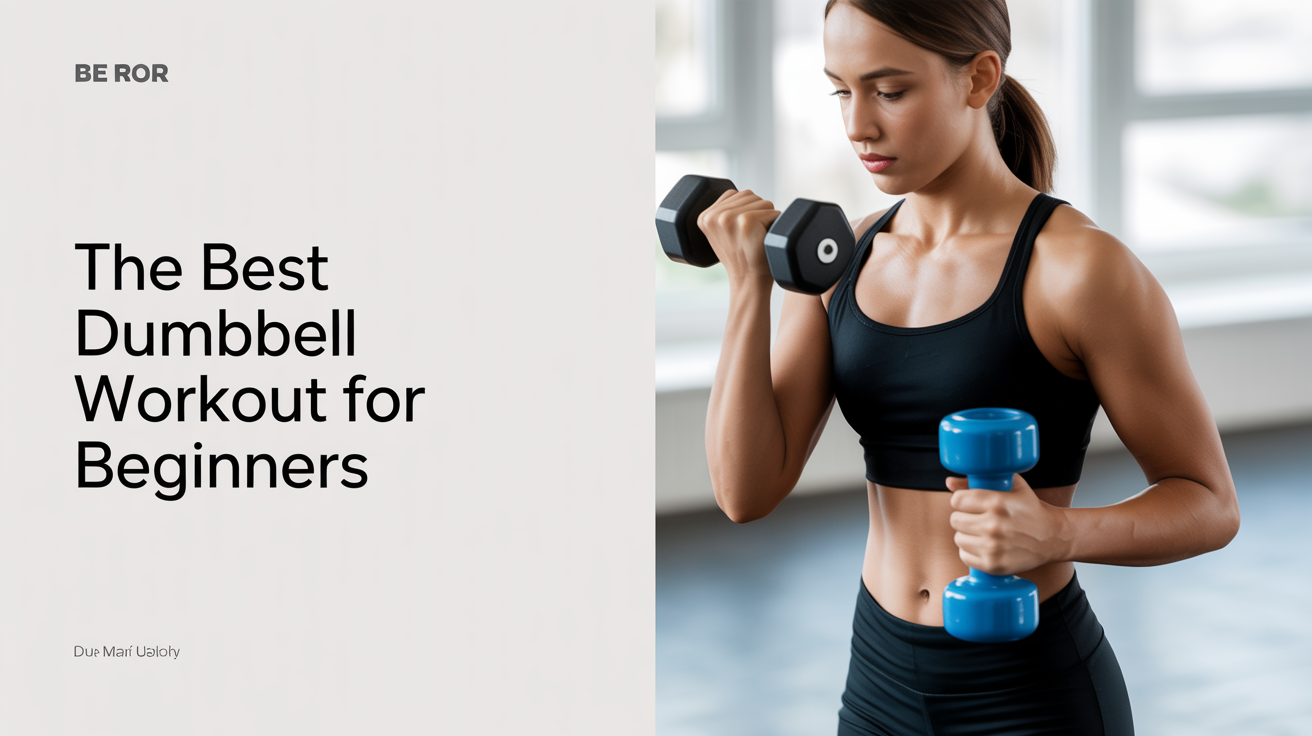
One pair of dumbbells is enough to build real strength, and you don't need a gym membership or a rack of equipment to get started. This routine covers every major muscle group, takes about 35 minutes, and is designed for people who have never lifted before (or who are coming back after a long break).
Before you load up and go, pick a weight that feels manageable. A good rule: you should be able to finish the last rep of each set with effort but without losing your form. Start lighter than you think you need to. You can always add weight next session.
What You Need
A single pair of adjustable dumbbells works best because you can change the load between exercises. Fixed-weight dumbbells work too; aim for something in the 10–20 lb range for most beginners, though the right weight varies by exercise. You'll also want a clear patch of floor and about 6 feet of space.
Warm up first. Spend 5 minutes doing arm circles, leg swings, bodyweight squats, and hip hinges. Cold muscles are more prone to strain, and warming up also improves the quality of your reps.
The Beginner Dumbbell Workout
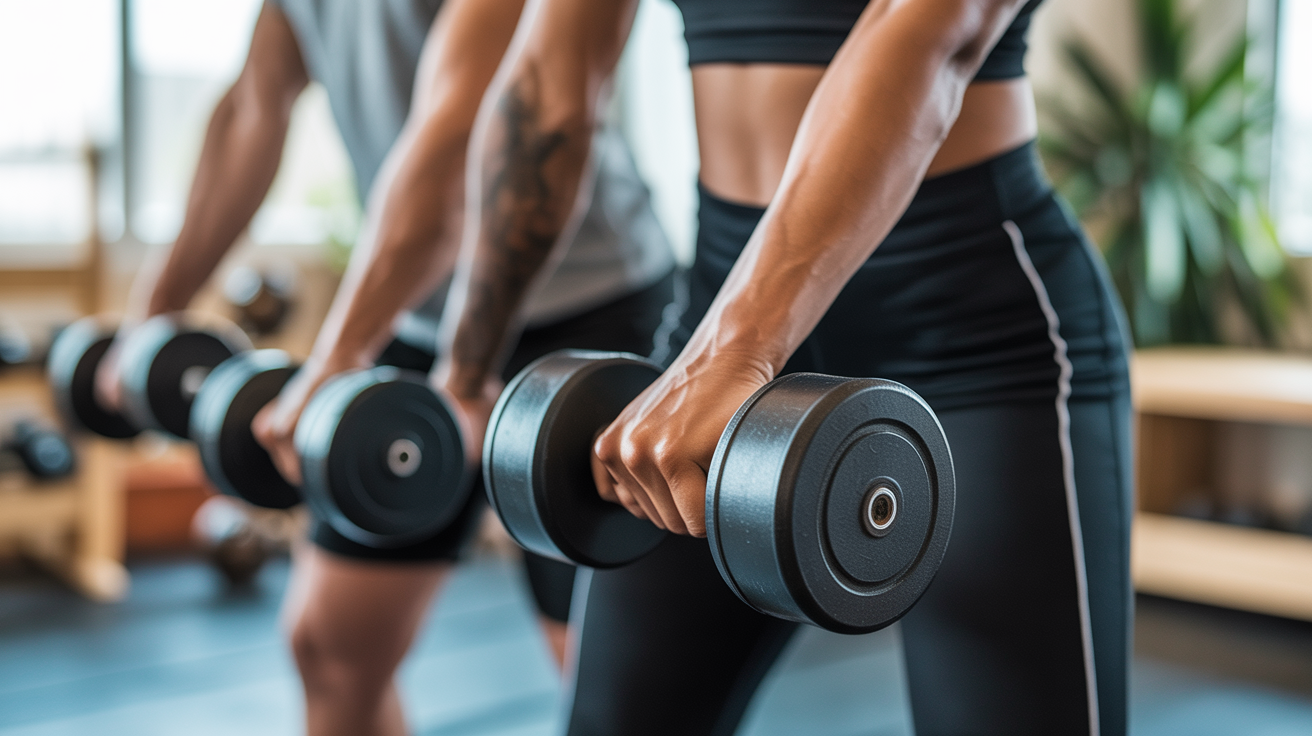
Complete all sets of each exercise before moving to the next. Rest 60–90 seconds between sets. Do this routine 2–3 times per week, with at least one rest day between sessions.
| Exercise | Sets x Reps | Key Cue |
|---|---|---|
| Goblet Squat | 3 x 10 | Chest tall, knees track over toes |
| Romanian Deadlift (RDL) | 3 x 10 | Hinge at hips, soft knee bend |
| Floor Press | 3 x 10 | Elbows at 45°, press straight up |
| One-Arm Dumbbell Row | 3 x 10 each side | Pull elbow to hip, not ear |
| Overhead Press | 3 x 10 | Core tight, don't arch your lower back |
| Dumbbell Dead Bug | 3 x 8 each side | Low back stays pressed to floor |
Exercise-by-Exercise Breakdown
Goblet Squat
Hold one dumbbell vertically at your chest with both hands cupped around the top end. Stand with feet shoulder-width apart, toes turned out slightly. Push your hips back and down, keeping your chest up and your torso as upright as possible. Go as deep as you can without your heels rising or your lower back rounding. Press through your heels to stand.
Why it's in here: The goblet squat teaches squat mechanics better than almost anything else. The dumbbell acts as a counterbalance, making it easier to stay upright than a barbell back squat.
Progress: Once you can do 3 x 12 with good form, increase the dumbbell weight by 5 lbs.
Romanian Deadlift (RDL)
Hold a dumbbell in each hand in front of your thighs. Stand with feet hip-width apart. Push your hips back while lowering the dumbbells along your legs, keeping them close to your body. Your back stays flat; your knees have a soft (not locked) bend. Lower until you feel a stretch in your hamstrings, usually mid-shin level, then drive your hips forward to return to standing.
Why it's in here: The RDL builds the posterior chain (hamstrings, glutes, lower back) and teaches the hip hinge, which transfers to dozens of other movements.
Progress: Same rule: hit 3 x 12 cleanly, then add weight.
Floor Press
Lie on your back with knees bent, feet flat. Hold a dumbbell in each hand above your chest, elbows bent at roughly 45 degrees from your torso (not flared out to 90). Lower your elbows until they touch the floor, pause briefly, then press back up. The floor acts as a built-in depth stop, which makes this safer for shoulder joints than a full bench press for beginners.
Why it's in here: It trains the chest, shoulders, and triceps. The floor contact removes the instability that can cause shoulder strain on a regular bench.
Progress: Add weight when 3 x 12 feels controlled throughout.
One-Arm Dumbbell Row
Place your right knee and right hand on a sturdy chair or the edge of a couch for support. Hold a dumbbell in your left hand, arm hanging straight down. Pull the dumbbell up by driving your elbow toward your hip (not your ear). Pause at the top, then lower slowly. Complete all reps on one side before switching.
Why it's in here: Rows train the upper back and biceps. Beginners often neglect pulling movements and end up with an imbalance between their pushing and pulling strength.
Progress: Add weight or try 3 x 12 before moving up.
Overhead Press
Stand with feet shoulder-width apart, a dumbbell in each hand at shoulder height. Brace your core so your lower back doesn't arch. Press both dumbbells straight up until your arms are fully extended overhead. Lower them back to shoulder height with control.
If standing feels unstable, do this seated on a chair with a back. Either way, avoid letting your lower back hyperextend at the top.
Why it's in here: Overhead pressing builds shoulder and triceps strength and requires core stability to do safely.
Progress: Strict form matters here more than weight. Go up only when you can complete 3 x 12 without any lower-back arching.
Dumbbell Dead Bug
Lie on your back with arms pointing straight up toward the ceiling, knees bent at 90 degrees directly over your hips (like a tabletop position). Hold one light dumbbell in your right hand. Press your low back into the floor and keep it there throughout the movement. Slowly extend your right arm overhead and your left leg straight out, lowering both toward (but not touching) the floor. Return to the start and repeat on the opposite side (left arm, right leg).
Why it's in here: The dead bug trains anti-extension core stability, meaning your abs work to prevent your lower back from arching under load. This directly supports safer squatting, pressing, and deadlifting.
Progress: Focus on keeping the low back flat. Add a second dumbbell (one in each hand) when you can do 3 x 8 per side with full control.
How to Progress Over Time
The simplest approach: add one rep per set each week. When you reach 3 x 12 on an exercise, increase the weight by the smallest increment available and drop back to 3 x 10. This is called double progression, and it's one of the most reliable methods for beginners.
Track your workouts on paper or in a notes app. Write down the exercise, weight used, and reps completed each session. Numbers don't lie, and seeing consistent improvement is also good motivation.
If you want to build more volume over time, adding a fourth exercise set or introducing a second workout day (with a rest day between) are both reasonable next steps. For more on home-based programming, a full bodyweight workout for beginners with no equipment is a solid complement to dumbbell training, and how to build muscle at home with minimal equipment covers the broader principles. If you want variety, a resistance band workout you can do anywhere pairs well with this routine.
Safety Notes
Stop the set if you feel sharp joint pain (not general muscle burn). Lower back pain during the RDL usually means you've rounded your spine or gone too heavy. Shoulder pain during pressing often comes from elbows flaring too wide. Fix the form first; add weight only when movements feel smooth.
Rest days matter. Muscle grows during recovery, not during the workout itself. Two or three sessions per week is enough for a beginner to make consistent progress.
Frequently Asked Questions
How heavy should my dumbbells be as a beginner?
Start lighter than feels necessary. For most beginners, something in the 10–15 lb range works for upper body exercises and 15–25 lbs for squats and RDLs, but this varies widely. If you can complete 10 reps and feel almost no effort, go heavier. If you can't control the weight through a full range of motion, go lighter.
How many days a week should I do this workout?
Two to three days per week with at least one rest day in between is the standard recommendation for beginners. More is not better at this stage. Your muscles need time to recover and adapt between sessions.
Can I do this workout with a single dumbbell?
Yes, with adjustments. For bilateral exercises like the floor press and overhead press, do one arm at a time. For the goblet squat, hold the dumbbell vertically at your chest as described. It's less convenient but fully workable.
Do I need to warm up every time?
Yes. Even a 5-minute warm-up (light cardio, joint circles, a few bodyweight reps of the movements you're about to do) reduces injury risk and improves how well you move through the exercises. Skip it consistently and you're more likely to strain something.
When will I start seeing results?
You'll likely notice strength improvements within 2–3 weeks as your nervous system adapts. Visible changes in muscle size take longer, typically 6–8 weeks of consistent training and adequate protein intake (around 0.7–1g of protein per pound of bodyweight per day is a reasonable target). Consistency over months matters far more than perfect execution on any single session.