Gear & Setup
How to Set Up a Workout Space in a Small Apartment
How to set up a home gym in a small apartment: the gear you actually need, how to protect floors, and a layout that fits almost any space.
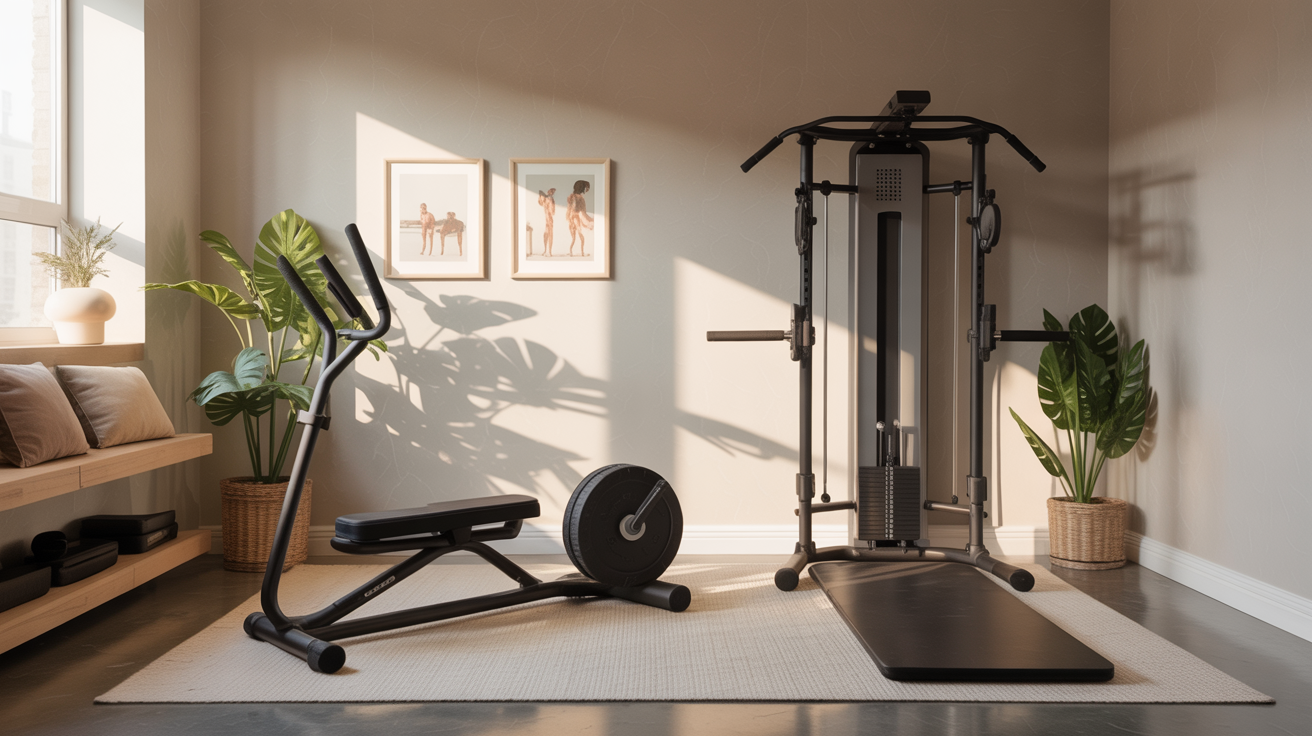
You do not need a spare bedroom or a two-car garage to train at home. A six-by-six-foot patch of open floor is enough to cover most of what beginners need: bodyweight circuits, dumbbell work, mobility drills, and core training. What matters more than square footage is making smart choices about gear, floor protection, and how you organize the space so it stays usable without taking over your living room.
This guide walks through how to choose your spot, protect your floors, pick gear that fits, and train safely when walls are close and neighbors are below.
Find the Right Spot in Your Apartment
Before buying anything, walk your apartment and look for a footprint where you can lie flat and extend your arms without hitting furniture. That is roughly six feet long by four feet wide, though six by six gives you a comfortable buffer for movements like lunges or lateral steps.
Good candidates:
- A cleared section of living room beside a couch or coffee table that can shift when needed
- A bedroom corner once you angle the bed
- A hallway if it is wide enough (some are not, but it is worth measuring)
- A balcony in mild climates, as long as the surface is level
Avoid spots directly below a light fixture you might hit during overhead presses with dumbbells, and stay clear of sliding glass doors or large mirrors when you are doing anything ballistic. Natural light and ventilation help a lot with motivation, but the training itself does not require either.
Protect Your Floors (and Your Lease)
This step matters more than most people realize before their first dropped dumbbell. Hard flooring scratches easily, and the noise of weights hitting an uncushioned surface travels straight down to your neighbor.
The standard fix is rubber flooring. Interlocking rubber tiles, typically 3/4 inch thick, are the most flexible option for renters because you can cover only what you need and store or remove them when you move. A 10-square-foot section runs around $30 to $60 at most hardware or fitness retailers and handles dumbbells up to around 50 pounds without issue. If you go heavier than that, a second layer or a 1-inch tile is worth considering.
A few practical notes:
- Lay tiles on a clean, dry floor. Grit underneath will scratch hardwood over time even through rubber.
- Leave a small gap around baseboard heaters to avoid blocking airflow.
- Test one tile overnight before buying a full set. Some rubber tiles off-gas a strong smell that takes days to air out in a small space.
- If your lease prohibits floor modifications, rubber tiles still count as furniture, not a modification, in most cases. Check with your landlord if you are unsure.
For noise specifically: rubber tiles reduce impact sound but do not eliminate it. If you are above another unit, controlled movement matters. Lower weights carefully rather than dropping them, and avoid jump training during early morning or late-night hours.
The Gear That Actually Fits
A compact home gym does not need to mimic a commercial gym. The goal is covering the main movement patterns: push, pull, squat, hinge, and carry. You can do a lot of that with very little.
The short list for most beginners:
- A pair of adjustable dumbbells or a small fixed set in two or three weights. Adjustable models save floor space significantly compared to a rack of fixed dumbbells. Adjustable dumbbells vs. a set: which should you buy covers the trade-offs in detail.
- A resistance band set with at least three resistance levels. Bands store in a drawer, cost under $30, and add pull patterns (rows, pull-aparts, face pulls) that dumbbells alone do not cover well.
- A yoga mat or thin exercise mat for floor work, stretching, and mobility. This goes on top of your rubber tiles and is easier to wipe down.
- A sturdy chair or low coffee table for incline push-ups, step-ups, dips, and seated overhead press. You already own this.
That is the floor. Most beginners can run a full program with just those four items. If you want to expand, a pull-up bar that mounts in a door frame is a useful next step and stores flat. A kettlebell in the 12 to 16 kg range is versatile and takes up less floor space than a dumbbell rack.
For a full breakdown of what to buy first and in what order, see the best home gym equipment for beginners. If you are working with a tight budget, how to build a home gym on a budget walks through what to prioritize at different price points.
A Sample Layout for a Six-by-Six Space
Here is how a typical compact setup might be arranged:
| Zone | What goes there |
|---|---|
| Center (open) | Your 6x6 rubber tile area; cleared for all movement |
| Wall or corner | Dumbbells stored on end, stacked vertically to save footprint |
| Shelf or bin | Bands, mat, and small accessories |
| Door frame | Pull-up bar (installed only when in use if needed) |
The goal is zero tripping hazards. Keep the center completely clear before you start any session. A cluttered floor combined with fatigue is how sprains happen at home.
Training Safely When Space Is Tight
Working out in a small space introduces a few hazards that a gym layout does not. Here is what to keep in mind before starting any session.
Clear before every workout. Push furniture back, move any items from the perimeter, and do a quick visual scan. A phone left on the floor or a chair pulled in too close is easy to miss when you are focused on a movement.
Know your ceiling height. Overhead movements with dumbbells or a barbell require clearance. If your ceilings are standard eight feet, most dumbbell overhead work is fine. Check by standing tall and extending a dumbbell overhead before you start pressing.
Start lighter than you think you need to. In a small space, a stumble or a missed catch can put you into a wall, a piece of furniture, or a corner fast. This is especially relevant for beginners learning hinge patterns like Romanian deadlifts or any unilateral movement like single-leg deadlifts. Build the pattern first with a light weight, then progress.
Ventilate the space. A small closed room heats up faster than a gym floor. Open a window or run a fan. Overheating raises heart rate artificially and impairs coordination.
See a doctor before starting a new program if you have any existing health conditions, are pregnant, or have had recent injuries. This is general fitness information, not medical advice, and individual needs vary. If you experience sharp pain, dizziness, or chest discomfort at any point, stop and consult a qualified professional.
Frequently Asked Questions
How much space do I actually need for a home workout? A six-by-four-foot footprint covers most bodyweight and dumbbell work. Six by six is more comfortable if you are doing lunges, lateral movements, or any floor work that requires rolling. Measure your available space with tape before buying rubber tiles so you know exactly what you are working with.
Will dropping dumbbells damage my apartment floors? Yes, even light dumbbells can dent hardwood or scratch tile if dropped without protection. Three-quarter-inch rubber tiles absorb most of the impact. Beyond floor protection, you should aim to lower weights with control rather than dropping them as a habit, both for your floors and for your joints.
Can I do a full strength training program in a small apartment? Yes, with adjustable dumbbells and a resistance band set, you can cover push, pull, hinge, squat, and core patterns. Beginners typically do not need more than that to make consistent progress for the first year. As you get stronger, the limiting factor becomes dumbbell weight rather than space.
What is the quietest way to train at home so I do not disturb neighbors? Rubber tiles reduce impact noise significantly. Avoid jumping movements during early morning or late-night hours. Lower weights slowly rather than dropping them. If your building has thin floors, bodyweight circuits and resistance band work during off-hours are the most neighbor-friendly option.
Do I need to tell my landlord I am setting up a home gym? Rubber tiles and portable equipment do not require landlord approval in most leases. If you are considering anything wall-mounted beyond a standard door-frame pull-up bar, check your lease first. When in doubt, ask, because some leases are specific about hardware in walls or ceilings.