Gear & Setup
Do You Need Resistance Bands? A Beginner's Buying Guide
Resistance bands are cheap, portable, and joint-friendly. Here's what beginners actually need to know before buying a set.
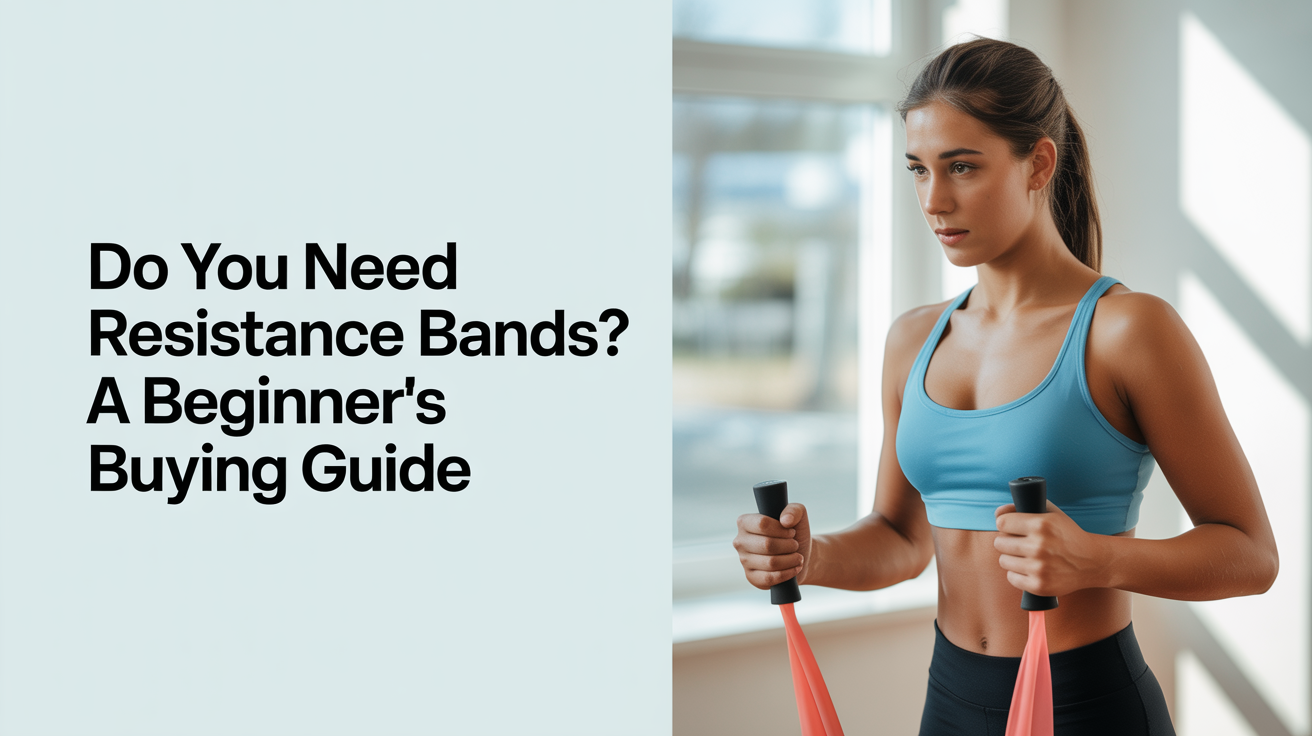
Short answer: yes, most beginners should own at least one set. They cost less than a month of gym fees, take up almost no space, and cover a surprising range of movements. The longer answer depends on what you're trying to accomplish.
Why Resistance Bands Are a Solid Starting Point
Cost and space
A complete set of loop bands typically runs $15–$35. Tube bands with handles are slightly more, usually $20–$50 for a decent kit. Compare that to a single adjustable dumbbell, which starts around $50–$80 on its own. For someone testing whether they'll actually stick with training, bands lower the financial risk considerably.
Storage is almost a non-issue. A full set rolls into a small bag you can toss in a drawer or a backpack. If your home gym setup is a corner of a bedroom or a small apartment, bands fit where nothing else would.
Joint-friendliness and beginner mechanics
Because bands provide accommodating resistance, the load increases as you stretch the band and lightens as you return. That means the most demanding point of a movement isn't necessarily at the start, and the joint stress on the release is gentler than with a fixed weight. For beginners whose tendons and connective tissue aren't yet conditioned, this can mean fewer aches in the first weeks of training.
This doesn't mean bands are injury-proof. Poor form is still poor form. But they do give more margin for error on movements like rows and pull-aparts compared to jumping straight to heavy dumbbells.
Pull-up assistance
One of the highest-value uses for a thick loop band (sometimes called a power band) is assisted pull-ups. Loop the band around the bar, put your knee or foot through it, and the band counteracts a portion of your bodyweight. This lets beginners train the pull-up pattern from day one, building lat and bicep strength progressively as they move to lighter assistance bands over time. No machine required.
Warm-ups and activation
Lighter bands are excellent for warming up shoulders before pressing, activating glutes before squats, and doing face pulls or band pull-aparts to balance out pushing work. Most beginners skip these steps entirely, but incorporating them reduces injury risk and improves performance on main lifts. A light loop band costs almost nothing and sits on a doorknob until you need it.
Types of Resistance Bands
Not all bands are the same, and buying the wrong kind is frustrating. Here's a plain breakdown.
| Band Type | Description | Best Uses |
|---|---|---|
| Mini loop bands (short) | 9–12 inch loops, fabric or latex | Glute activation, lateral walks, leg press warmups |
| Long loop / power bands | 40–48 inch loops, heavy latex | Pull-up assist, full-body resistance training, stretching |
| Tube bands with handles | Rubber tubing + foam grips | Rows, bicep curls, chest press, shoulder work |
| Figure-8 bands | Short, figure-eight shape | Ankle/wrist isolation, ankle lateral training |
| Therapy bands (flat sheets) | Thin flat latex, no loop | Rehab exercises, very light activation work |
For most beginners building strength at home, a set of long loop bands covers the most ground. You can use them for lower body, upper body, pull-up assistance, and mobility. A set of mini loop bands is a worthwhile add-on, especially for glute work and leg activation. Tube bands with handles are a reasonable choice if you want to mimic gym machine movements like cable rows or chest flyes.
What to Look for When Buying
Resistance levels
Buy a set, not a single band. Most quality sets include four to six bands in graduated resistance, commonly labeled light/medium/heavy/extra-heavy or color-coded. Starting with one band at the "wrong" resistance level is the most common mistake beginners make. Having a range lets you match resistance to the movement (lighter for shoulder rotations, heavier for rows) and progress over time by moving to the next band or stacking two bands together.
Resistance is listed in pounds or kilograms, but treat those numbers as rough estimates. There's no standardized testing protocol across manufacturers, so a "40 lb" band from one brand may feel noticeably different from another. Read reviews that compare multiple brands if specifics matter to you.
Material
Latex bands last longer and snap back more crisply than non-latex alternatives. The downside is latex allergies; if that applies to you, look for fabric mini bands (very durable for lower-body work) or TPE (thermoplastic elastomer) tube bands.
Fabric mini bands don't roll up your thighs or snap against your legs, which makes them more comfortable for hip and glute work. For long loop bands used in pull-up assistance or full-body moves, latex is still the most common and most durable option.
Check the band for any visible nicks, thin spots, or discoloration before each session. A band that snaps mid-rep can cause a significant welt. Most quality bands last a year or more with normal use, but inspect them regularly, especially around any folded or stressed areas.
Anchors and accessories
If you plan to use tube bands for pressing or rowing exercises, you'll need a door anchor. Most tube band kits include one. Make sure the door you're using closes securely against the anchor strap; an interior door without a solid frame can pull loose under load.
Some people mount a dedicated anchor point to a wall stud, which is more stable for heavier loads. For most beginner work, the door anchor is sufficient.
What Bands Don't Do Well
Bands are a genuinely useful tool, but there are real limits worth knowing before you buy.
Progressive overload is harder. With dumbbells, adding 5 lbs is concrete and measurable. With bands, progression means switching to a heavier band (a bigger jump) or stacking bands (which changes the feel). You can get stronger with bands, but tracking small, consistent increases is less precise. For beginners comparing equipment options, this is one reason bands work well alongside free weights rather than as a complete replacement.
Heavy compound loading is limited. Squatting or deadlifting with bands alone caps out at relatively low resistance for most people. After a few months of consistent training, you'll likely outpace what bands can provide for lower-body strength. Free weights scale further.
Consistent tension curves feel different from weights. Bands get harder the more you stretch them, which means the hardest point of a bicep curl with a band is at the top, not the middle. This is different from dumbbells, and while it's not inherently bad, it means you're training a somewhat different stimulus. Both have value; just know they're not identical.
For a detailed look at how free weights compare as you advance, see adjustable dumbbells vs. a set: which should you buy.
Frequently Asked Questions
Are resistance bands effective for building muscle?
Yes, for beginners. Research on untrained individuals shows meaningful strength and hypertrophy gains from band-only training, comparable to machine-based or light free-weight programs. The key factors are the same as with any training: progressive challenge, sufficient volume, and consistency. Bands are most effective when you're actually making the work harder over time.
How do I know which resistance level to start with?
A simple test: if you can complete 15 reps of an exercise with good form and the last few reps feel easy, the band is too light. If you can't complete 8 reps with good form, it's too heavy. Aim for something where 10–12 reps is genuinely challenging by the final two. Most beginners find a "light" to "medium" band appropriate for upper body isolation work, and "medium" to "heavy" for rows and lower body exercises.
Do resistance bands wear out?
Yes. Latex bands degrade over time, especially with exposure to sunlight, oils (lotion, sweat), and heat. Store them in a bag or drawer away from direct sun. Inspect for small tears or thin spots before each use. A band that's starting to look chalky, cracked, or discolored at the fold points is due for replacement. Most people replace bands every 1–2 years with regular use.
Can I use resistance bands if I have joint pain?
Bands are often recommended in physical therapy settings precisely because the accommodating resistance is gentler on joints at vulnerable positions. That said, any exercise that causes sharp or worsening pain should be stopped and evaluated by a medical professional. Bands aren't a substitute for proper diagnosis or rehab guidance.
Do I need to buy an expensive set?
No. Many well-reviewed sets fall in the $20–$40 range and hold up fine for years of regular use. The main things to verify are consistent color-coded sizing (so you know which is which) and latex or quality TPE construction. Very cheap single-pack bands from discount bins tend to snap earlier and have inconsistent resistance labeling.