Gear & Setup
Do Beginners Need a Weightlifting Belt or Gloves?
Find out whether beginners actually need a weightlifting belt or gloves, what each accessory does, and what to buy first when you're just starting out.
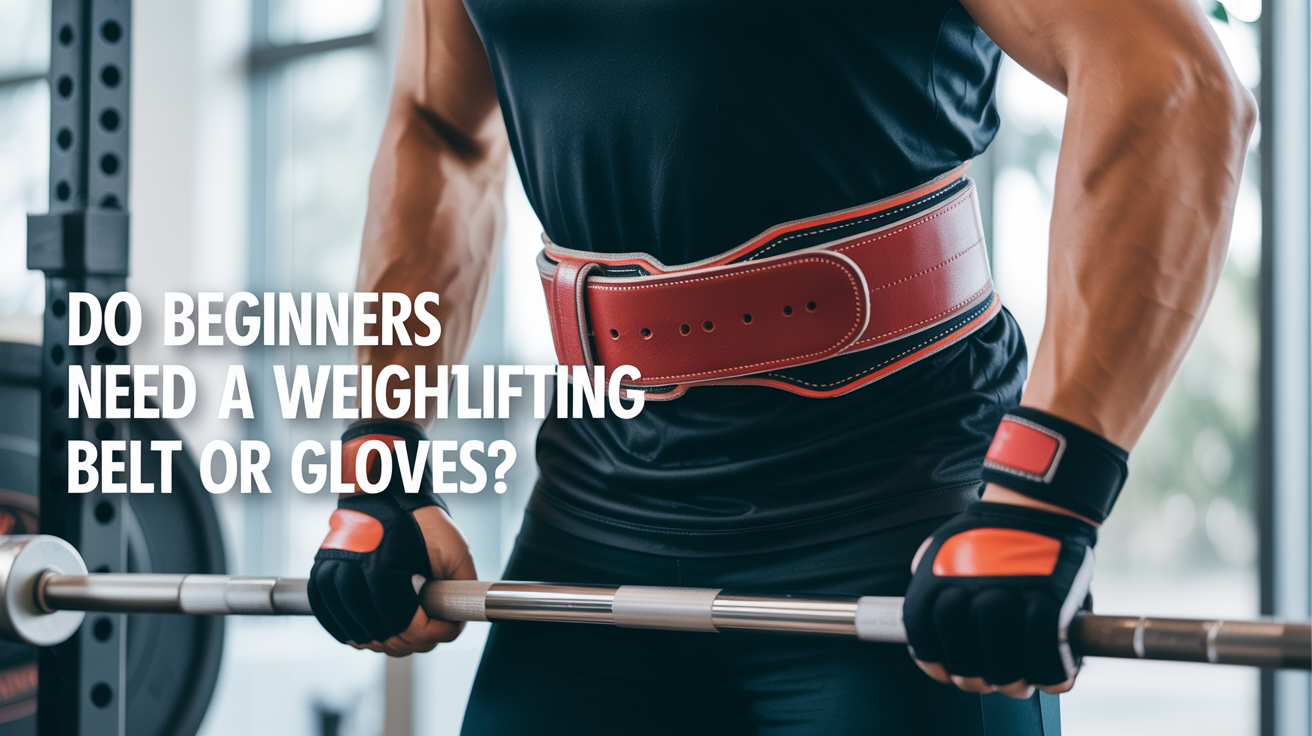
Walk into any commercial gym and you'll spot lifters wearing belts, straps, gloves, and knee sleeves before they've touched the bar. It can make a new lifter feel underprepared. The truth is that most of that gear is designed for specific situations, and for beginners those situations don't apply yet.
This guide covers what a weightlifting belt and lifting gloves each actually do, when they start to make sense, and where your early gear budget is better spent.
What a Weightlifting Belt Actually Does
A belt doesn't hold your back together. That's a common misunderstanding worth clearing up from the start.
What a belt does is give you something hard to push against with your abdominal muscles. When you brace before a heavy squat or deadlift, you're creating intra-abdominal pressure, a kind of internal rigidity that protects the spine. A stiff belt around your midsection lets you create more of that pressure because there's a rigid surface to push out against on all sides, not just your back.
This is useful at high loads, typically competition-level weights or max-effort training where the lifter already has near-perfect bracing mechanics. It is not useful if you haven't built that bracing skill first.
Using a belt early can actually slow your progress. If the belt is doing the job of stabilizing your torso, your core muscles and the neural patterns for bracing don't develop as quickly. You end up dependent on the belt at weights where you shouldn't need it.
The practical threshold most coaches use is somewhere around a double-bodyweight squat or deadlift. Before that point, building a raw brace is the better investment of your attention.
What Lifting Gloves Do (and Don't Do)
Gloves protect your palms from calluses and bar grip. That's about it.
The downside is that gloves add thickness between your hand and the bar, which reduces the feedback you get from the bar and can slightly weaken your grip by spreading the load differently. They also let calluses stay soft, which means when you train without them, the bar feels rough fast.
Most serious lifters prefer bare hands. Building calluses takes a few weeks and then stops being a problem. The grip feedback from bare skin is genuinely useful, especially when learning to position your hands correctly on a barbell squat or feel bar path on a deadlift.
Gloves are a reasonable choice if you do a lot of pull-up work and find the friction painful, or if you train in an environment where the bars are rough and worn. But for standard barbell training, most beginners are better off without them.
What Beginners Actually Need in Their Gear Kit
The short list is shorter than most gear guides suggest.
Shoes with a flat, hard sole matter more than almost anything else. Cushioned running shoes compress under load, which destabilizes your base on squats and deadlifts. A pair of flat-soled shoes, like Chuck Taylor high-tops or dedicated lifting shoes, gives you a firm, consistent platform. You may already own something suitable.
A belt, only when the time comes. If you're early in your training, put the belt money toward something you'll use immediately. If you do decide to buy one, a simple 4-inch leather or nylon belt with a single prong buckle works fine. Avoid wide powerlifting belts to start, as they're stiff and designed for near-maximal loads. A medium-width belt you can actually move in is the more practical buy.
Chalk over gloves. Magnesium carbonate chalk is cheap, legal in most gyms, and fixes grip problems without the downsides of gloves. A small block lasts months. Some gyms restrict loose chalk but allow liquid chalk, which is worth checking before you buy.
For a more detailed breakdown of what gear is worth buying before you invest in any accessories, see The Best Home Gym Equipment for Beginners and How to Build a Home Gym on a Budget.
When to Reconsider: Belt vs. No Belt Over Time
The decision isn't permanent. Most lifters cycle through a few phases:
Phase 1 (beginner, roughly the first 6 to 12 months of consistent training): Train without a belt. Learn to brace. Develop the core strength that makes a belt useful later. Focus on form over load.
Phase 2 (intermediate): As weights climb and top sets start feeling genuinely heavy, a belt becomes a reasonable tool for those heavy sets. Many lifters still do warm-up sets beltless to reinforce the brace, then add the belt for top-set work.
Phase 3 (advanced): Belt use is common and intentional. At this stage the belt is enhancing a well-developed skill, not compensating for a gap.
If you're deciding between adjustable dumbbells vs a fixed set or figuring out your first equipment purchases, a belt belongs lower on the priority list than the training tools you'll use every session.
How to Know When You're Ready for a Belt
A few signs that a belt will actually help rather than act as a crutch:
- You can brace your core tightly without the belt and feel the difference in stability between a braced and unbraced rep
- Your squat or deadlift has stalled despite consistent effort and good form, and you're lifting loads that genuinely challenge your whole body
- You've had a coach or experienced training partner evaluate your form and confirmed your technique is solid
If those don't apply yet, keep training beltless. The time will come, and when it does the belt will make a noticeable difference.
Frequently Asked Questions
Can wearing a belt too early hurt you?
It won't directly injure you, but it can slow the development of core strength and bracing habits that matter long-term. If you rely on a belt before you understand how to create intra-abdominal pressure on your own, you'll have a harder time training when the belt isn't available and may miss a key foundation. If you have any existing back issues or injuries, talk to your doctor or a qualified physical therapist before adding a belt or increasing load.
Do I need gloves if my hands hurt after lifting?
Some initial discomfort is normal as calluses form. If you're gripping the bar correctly (bar across the base of the fingers, not the palm), calluses develop in roughly two to four weeks and the soreness fades. If pain is sharp or persistent rather than just skin friction, something may be off with your grip position, or the bar may be unusually rough. Consider chalk and check your grip before buying gloves.
Are there any accessories that are actually worth buying early?
Flat-soled shoes are the clearest early purchase with a real performance effect. Chalk is cheap and helpful for grip. A foam roller or lacrosse ball for mobility work is useful if you plan to stay consistent. Everything else, including belts, straps, and knee sleeves, becomes relevant as your training matures and your loads climb.
What kind of belt should I buy when I'm ready?
A 4-inch nylon or leather belt with a single prong is a solid starting point. It's easier to get on and off than a lever belt, moves well for different exercises, and holds up for years of training. Velcro belts exist but typically don't hold under heavier loads. Wide powerlifting belts (4 inches in the back, 3 inches in the front) are purpose-built for competition and max-effort work, which is a different context than general training.
Is it okay to train with just bodyweight and no gear at all?
Absolutely. Many effective beginner programs require nothing more than your own body, a pull-up bar, and floor space. Gear adds marginal benefit at advanced loads. It doesn't make or break your results as a beginner. Consistency and good form matter far more than anything you're wearing.