Home Workouts
Beginner Bodyweight Squat: Form and Progressions
Learn how to do a bodyweight squat with safe, beginner-friendly form. Step-by-step technique, common mistakes, and simple progressions to build real strength.
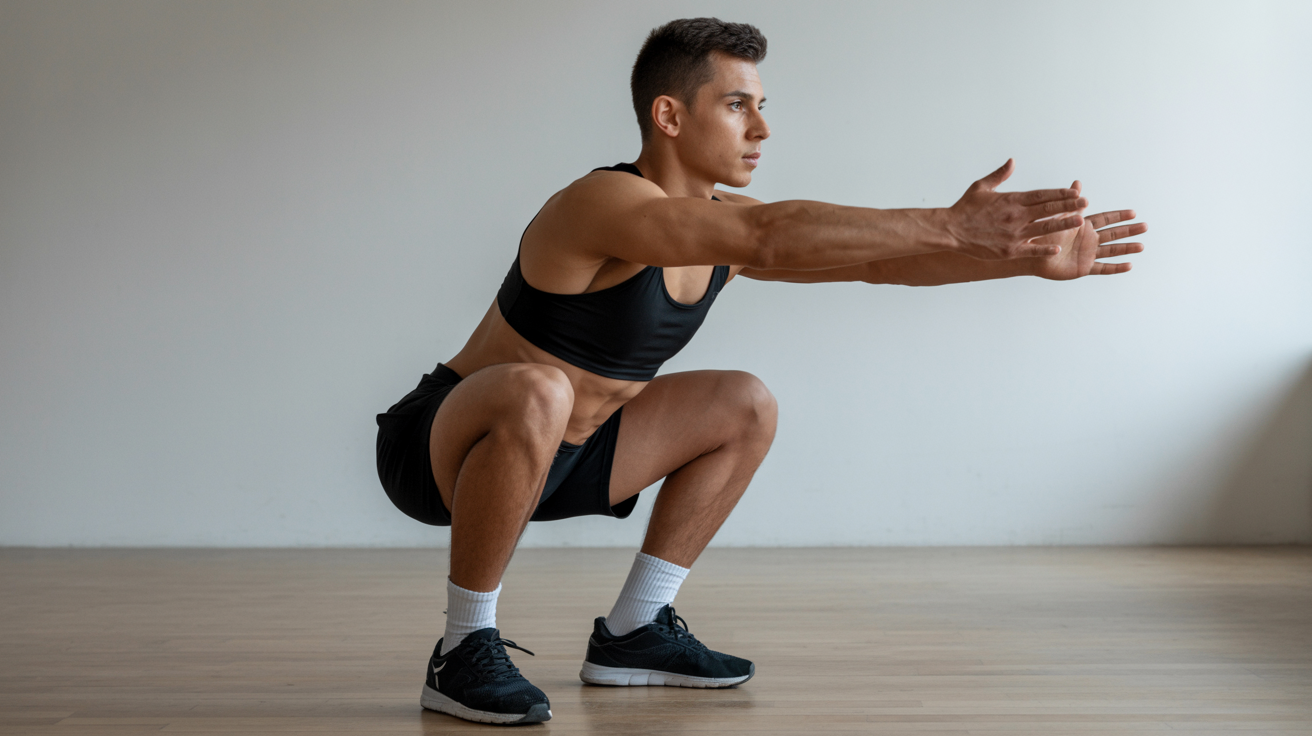
The squat is one of the most fundamental movement patterns your body does every day. Sitting into a chair, picking something up off a low shelf, lowering yourself to the floor with a child: all of these call on the same muscles you train with a bodyweight squat. That makes learning good squat form one of the highest-return things a beginner can do.
Before adding any weight to the movement, it pays to get the bodyweight version right. Good technique here carries over directly to goblet squats, barbell squats, and everything in between. If you have a current knee, hip, or lower-back injury, check with your doctor or physical therapist before starting. For healthy beginners with no joint issues, the bodyweight squat is a low-risk, high-value place to build your foundation.
At a Glance
- Push your hips back before you bend your knees, keep your chest up, and lower until your thighs are roughly parallel with flat heels.
- The two most common technique errors are heels rising (tight ankles) and knees caving inward (weak or under-recruited glutes).
- Research links limited ankle mobility to worse knee mechanics under load, which is exactly why flat heels matter so much in a squat.
- Once 3 sets of 15 clean reps feel easy, add a pause, a slower tempo, or a single-leg variation rather than just doing more reps.
- Two to three squat sessions a week, with a rest day between, is a reasonable starting frequency for beginners.
- Sharp or worsening knee pain is not something to train through; mild muscle soreness the next day is normal.
How to Do a Bodyweight Squat: Step by Step
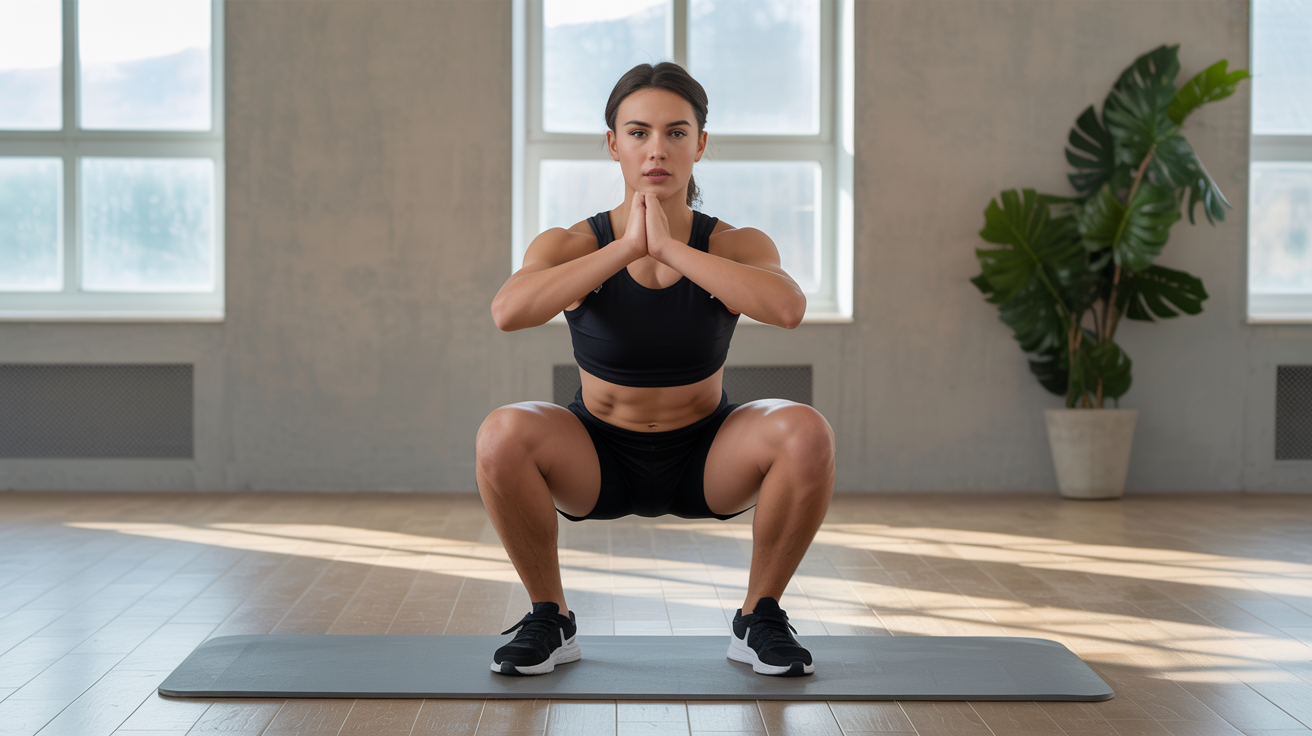
Start with your feet about shoulder-width apart. Your toes can point straight ahead or turned out slightly, somewhere between 0 and 30 degrees. Both options are fine; choose whichever feels natural and lets you lower without your heels rising.
The descent:
- Brace your core lightly, as if you are about to absorb a small punch to the stomach. Keep breathing normally.
- Push your hips back first, then bend at the knees. Think of it as sitting back and down rather than just dropping the knees forward.
- Keep your chest up and your spine in a neutral position. Your torso will lean forward slightly as you go deeper; that is normal. Avoid rounding your lower back.
- Let your knees track over your toes. They should not cave inward. If they do, think about pushing your knees out slightly as you lower.
- Lower until your thighs are roughly parallel to the floor, or as deep as you can go with good form and flat heels. Parallel is a useful target, but a shallower depth with clean technique is better than a deep squat with a rounded back.
The ascent: 6. Press through your whole foot, not just the ball of your foot or your heels. Drive up evenly. 7. Squeeze your glutes at the top and stand tall. Avoid hyperextending your lower back.
A single rep takes about three to four seconds total: two seconds down, a brief pause, two seconds up. Go slow enough that you are in control at every point.
Common Mistakes and How to Fix Them
Most beginners run into the same handful of problems. Knowing what to look for makes it easier to catch and correct them early.
Heels rising off the floor. This usually means tight calf muscles or ankles that lack the range of motion for a deep squat. The fix is to work on ankle mobility before each session (calf stretches, ankle circles) and to only go as deep as you can with your heels flat. Over time, your range will improve. This isn't just a comfort issue: research on ankle mobility and knee mechanics found that people with less ankle dorsiflexion (the ability to bring your shin toward your toes) show worse knee-flexion patterns and higher forces landing through the leg, a mechanical relationship that shows up in squatting too (Fong et al., 2011). Loose ankles genuinely change how safely the rest of the chain, knees included, absorbs load.
Knees caving inward. This is called valgus collapse and it puts extra stress on the knee joint. A literature review of this exact pattern found it's commonly driven by weak or under-activated glutes and, again, limited ankle mobility, and that structured feedback training (watching yourself in a mirror or on video, or using a resistance band as a cue) is one of the better-supported ways to correct it (Wilczyński et al., 2020). Strengthen your glutes and practice consciously pushing your knees out as you lower. Placing a resistance band just above your knees can give you useful feedback.
Rounding the lower back at the bottom. Often called "butt wink," this happens when your hips run out of range at the bottom and your pelvis tilts under. The solution is to stop your descent just before the point where your back rounds, and work on hip flexor and thoracic mobility over time.
Looking down. Keep your gaze forward or very slightly upward. Looking straight at the floor tends to pull your chest down and makes it harder to keep a neutral spine.
Rushing the movement. Speed hides technique problems. Slow down, especially on the way down.
Progressions: What to Do Once the Basic Squat Feels Solid
After a few weeks of practice, most beginners reach a point where bodyweight squats feel controlled and relatively easy. That is a good sign, not a problem. It means it is time to progress.
Pause squats. Add a two to three second hold at the bottom of each rep. This removes momentum and forces your muscles to work harder without adding any weight or equipment. It also builds awareness of your bottom position.
Tempo squats. Try a four-second descent, a one-second pause, and a two-second ascent. Slowing the movement increases time under tension, which is one of the main drivers of strength adaptation.
Single-leg work. A Bulgarian split squat, where your rear foot is elevated on a bench or chair, is one of the best bridges between a bodyweight squat and more demanding loaded movements. It trains each leg independently and requires real balance and hip stability.
Goblet squat. Once you want to add resistance, holding a single dumbbell or kettlebell at your chest is a natural next step. The goblet squat reinforces good squat mechanics because the weight helps you sit back and stay upright. If you are curious about how dumbbells fit into a home training setup, The Best Dumbbell Workout for Beginners walks through practical options.
Box squat. If depth is a challenge, squatting down to a sturdy box or chair and lightly touching it before standing back up can help you build confidence and control in the lower range.
When to Move to the Next Progression
Use rep quality, not just rep count, to decide when you're ready to advance. A simple checklist:
| Signal | Ready to progress? |
|---|---|
| 3 sets of 15 reps, heels flat, no knee cave | Yes, add a pause or tempo variation |
| Form breaks down (heels rise, knees cave) before 8 reps | No, work on mobility and cues first |
| No muscle fatigue at all after 3 sets of 15 | Yes, move to single-leg or loaded work |
| Knee or lower-back pain during the set | No, stop and address the cause before progressing |
How to Fit Squats Into a Beginner Workout
The bodyweight squat works well as part of a full routine or as a standalone drill to practice form. For a beginner, two to three squat sessions per week with at least one rest day between them is a reasonable starting point.
A typical beginner set-and-rep range for bodyweight squats: three sets of eight to fifteen reps, resting sixty to ninety seconds between sets. If fifteen reps feels easy and your form is clean, move on to one of the progressions above rather than doing endless high-rep sets.
Squats pair naturally with hip hinges (like deadlifts), upper body pushing, and upper body pulling. If you want to see how the squat fits into a complete routine, A Full Bodyweight Workout for Beginners: No Equipment lays out a balanced program you can do anywhere. For those who want to understand how bodyweight work fits into a broader strength-building picture, How to Build Muscle at Home with Minimal Equipment covers the key principles.
The squat does not need to be complicated. Consistent practice with sound mechanics, progressive challenge, and enough recovery time is what produces results over weeks and months.
Frequently Asked Questions
How deep should I squat as a beginner?
Aim for thighs parallel to the floor if your flexibility allows it. If your heels rise or your lower back rounds before you reach parallel, stop at the point where your form is still clean. Depth improves over time as your mobility develops. There is no benefit to forcing range of motion at the expense of good technique.
Should my knees go past my toes?
Some forward travel of the knee past the toe is normal and not harmful for most people with healthy knees. What matters more is that your knees track in line with your toes and do not cave inward. Extreme forward knee travel that lifts your heel, however, is a sign that something else needs attention.
How many squats should a beginner do per day?
There is no magic number. Three sets of ten to fifteen reps, two to three times per week with rest days in between, is a solid starting point. Daily practice of a small number of reps (five to ten) just to reinforce the movement pattern can also be useful, especially in the early weeks when you are still learning the technique.
I feel pain in my knees when I squat. What should I do?
Stop and rest. Mild muscle soreness in the front of the thigh or glutes after squatting is normal. Sharp knee pain, pain that persists after your session, or pain that gets worse over multiple sessions is not something to push through. See a doctor or physical therapist before continuing. Good squat form tends to reduce knee stress, not increase it, so technique may also be a factor worth reviewing with a professional.
Do I need any equipment to start?
No. A flat, non-slip surface and enough space to move is all you need. As you progress, a sturdy chair or box for box squats, or a single dumbbell for goblet squats, can add variety without requiring a full gym setup.
Why do my heels keep rising even when I focus on it?
Persistent heel lift usually points to a genuine ankle mobility limit rather than a cueing problem. Try a few minutes of ankle circles and calf stretching before you squat, and consider practicing your squat with your heels lightly elevated on a small plate or rolled towel while you build range. That's the same principle behind a raised-heel lifting shoe: reducing the ankle mobility demand temporarily so you can groove the rest of the pattern while you work on flexibility separately.