Strength Training
How to Build a Beginner Workout Split
Learn how to build a beginner workout split, whether full body or upper/lower, and find the structure that fits your schedule and goals.
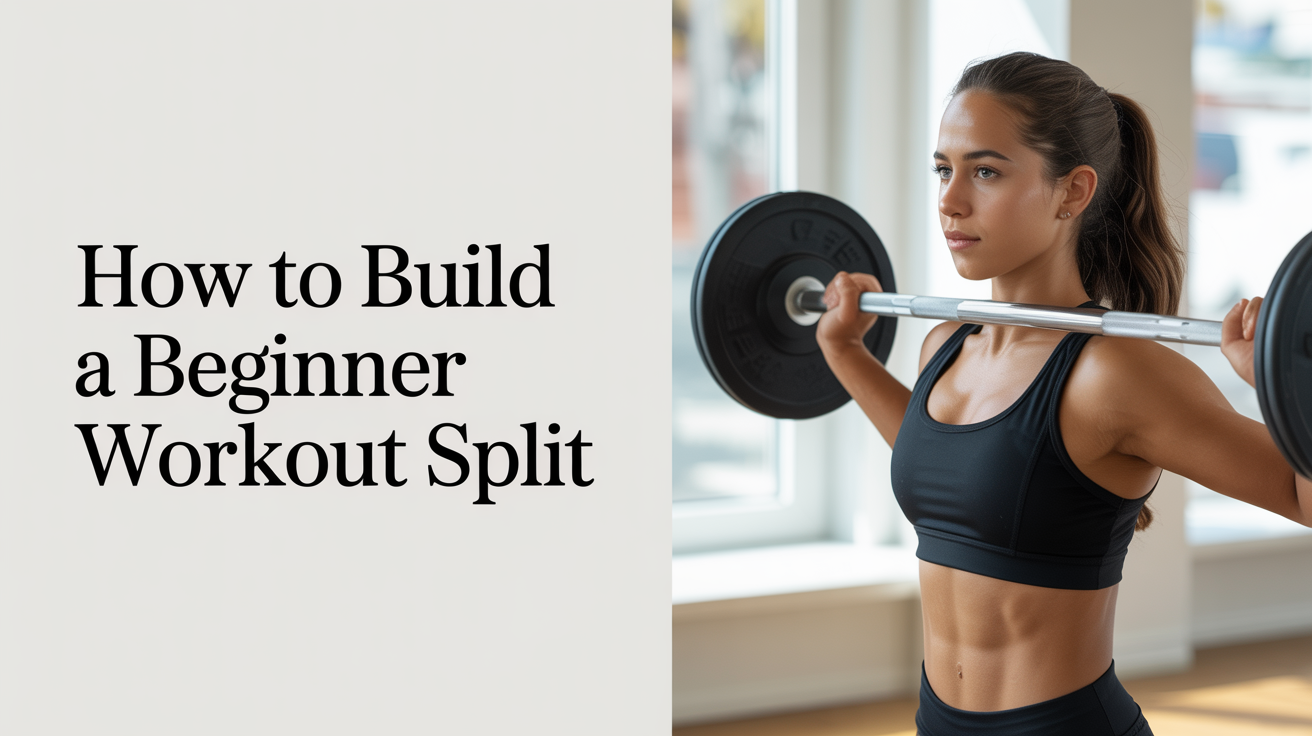
A workout split is just a plan for how you divide your training across the week. Some people train the whole body every session. Others dedicate different days to different muscle groups. Neither approach is magic. What matters is picking a structure you can follow consistently and then making it harder over time.
Most beginners overthink this decision. The honest answer is that your split matters far less than showing up, training with some effort, and adding weight or reps as you get stronger. That said, some structures suit the beginner stage better than others, and understanding the tradeoffs helps you choose one that fits your schedule.
Full Body vs. Split Routine: What the Terms Actually Mean
A full body routine trains every major muscle group in each session. You might squat, deadlift, press, and row all in the same workout. Three sessions per week is the standard setup, with rest or light movement on the days in between.
A split routine divides muscle groups across separate days. Upper/lower splits train the upper body one day and the lower body the next. Push/pull/legs splits separate pressing movements, pulling movements, and leg work into three distinct sessions. Traditional "bro splits" that dedicate an entire day to a single muscle, like a biceps-only day, are the most divided format of all.
The meaningful difference between these options comes down to how often you train each muscle group per week. A well-run full body routine gives each muscle three training sessions per week. An upper/lower split gives each muscle two. A push/pull/legs routine run three days per week gives each muscle one direct session. Research on muscle protein synthesis consistently shows that training a muscle group at least twice per week produces better results than once a week for most people, which is one reason full body and upper/lower layouts tend to outperform single-muscle splits at the beginner stage.
Why Full Body Training Works Well Early On
Before worrying about how to split your workouts, it helps to get solid on the 5 basic strength movements every beginner should learn. Squats, hip hinges, horizontal pushes and pulls, and vertical pushes are the foundation. Practicing each of those movements three times a week builds the coordination and motor patterns faster than touching each one only once a week.
There's also a practical advantage to full body training for beginners: missed sessions hurt less. If you miss leg day on a split, your legs get zero training for the week. If you miss a full body session, you just lose one of three chances to train everything. Life gets in the way sometimes, and a structure that survives occasional disruption serves beginners better than one that doesn't.
A simple starting layout:
| Day | Session |
|---|---|
| Monday | Full Body A |
| Wednesday | Full Body B |
| Friday | Full Body A (alternate) |
Session A might emphasize a squat and a horizontal press. Session B might emphasize a hip hinge and a vertical pull. Alternating keeps the volume manageable and gives you practice on a range of movements each week.
The Most Practical Beginner Splits, With Sample Schedules
Once you've been training for two to three months and feel controlled on your main lifts, you might consider a format that allows more volume per session. Here are the options worth considering.
3-Day Full Body The default starting point and the best choice for most beginners. Each session covers a leg push (squat variation), a leg pull or hinge (deadlift or Romanian deadlift), a horizontal press (bench press, dumbbell press, or push-up variation), and a horizontal pull (row). Check sets and reps explained for beginners if you're unsure how to structure the volume for each movement.
4-Day Upper/Lower A reasonable next step after two to three months of full body work. You train the upper body twice and the lower body twice per week, which keeps frequency high while allowing more focus per session.
| Day | Session |
|---|---|
| Monday | Upper Body |
| Tuesday | Lower Body |
| Thursday | Upper Body |
| Friday | Lower Body |
3-Day Push/Pull/Legs This can work, but the once-per-week frequency for each muscle group is the main drawback. Some people run it twice over six days, which gives each group two sessions and addresses the frequency issue. If you can only train three days, full body is usually more effective at the beginner level.
How to Build Your Own Split in Six Steps
-
Decide how many days per week you can actually train. Three days is enough to make real progress. Four is solid. More than four is rarely necessary for beginners and can slow recovery if you're not used to the training load.
-
Match the split to your schedule. Three days per week suits a full body routine best. Four days per week suits an upper/lower split well. If your schedule is unpredictable, a full body structure with non-consecutive days is more resilient.
-
Pick one main exercise per movement pattern per session. You don't need five chest exercises. One main press movement plus one or two accessories is plenty. More is not always better, especially early on.
-
Plan how you will make progress before you begin. A split without a progression method stops working quickly. Understanding what progressive overload is and how to use it makes any split far more effective over time.
-
Leave at least one rest day between sessions that train the same muscle group. If you train upper body Monday, don't train upper body Tuesday. Muscles repair and grow during rest, not during training.
-
Warm up before every session. Five to ten minutes of light movement, mobility work, or a few sets with an empty bar on your main lift prepares your joints and nervous system. This step is non-negotiable, especially on lower body days where the spine and hips are under load.
Start with less volume than you think you need. One of the most common mistakes beginners make with a new split is loading too many sets into each session from the start. Excessive soreness from day one makes the next session harder to get through, which slows progress. Build up gradually.
A safety note worth repeating: exercise carries real risk. Talk to your doctor before starting a new training program, particularly if you have any existing injuries, joint issues, or cardiovascular concerns. If a movement causes sharp pain or joint discomfort during a session (rather than normal muscle fatigue), stop that exercise and consult a qualified coach or physio before continuing.
Frequently Asked Questions
Is a full body split or a push/pull/legs split better for beginners? Full body training is the better starting point for most beginners. Practicing the main movement patterns three times per week builds strength and motor control faster than touching each pattern once per week. Push/pull/legs can work, but the once-per-week frequency is lower than ideal during the beginner phase when muscle groups can handle and benefit from more frequent practice.
How do I know when to move from full body to a split? A reasonable signal: you've trained consistently for two to three months, your form on the main lifts feels controlled, and sessions are running over 75 minutes because you're trying to fit enough volume into a single workout. That's a natural point to consider an upper/lower split. Don't rush the transition. There's no rule that says you have to move to a split.
Can I build muscle on a 3-day full body routine? Yes. Three well-run sessions per week with consistent effort and progressive overload is enough stimulus for beginners to gain significant muscle. The key is not the split structure itself but whether you're consistently adding weight or reps over time and recovering properly between sessions.
What if I can only train two days per week? Two full body sessions per week is better than nothing and still produces real results if you train consistently and work hard. You won't progress as quickly as with three or four sessions, but two solid sessions per week will make you stronger over months of consistent effort.
Do beginners need a dedicated arm day? Not at all. Rows and pull-up variations train the biceps heavily. Press variations train the triceps. Most beginners see solid arm development from compound movements alone without adding direct arm work. If you want to add curls or tricep extensions, one or two sets at the end of a session is plenty. A full arm day takes time that could be spent on movements with more overall return.