Strength Training
Free Weights vs. Machines: Which Is Better for Beginners?
Not sure whether to start with dumbbells or machines? This guide breaks down the real differences so beginners can make a confident choice.
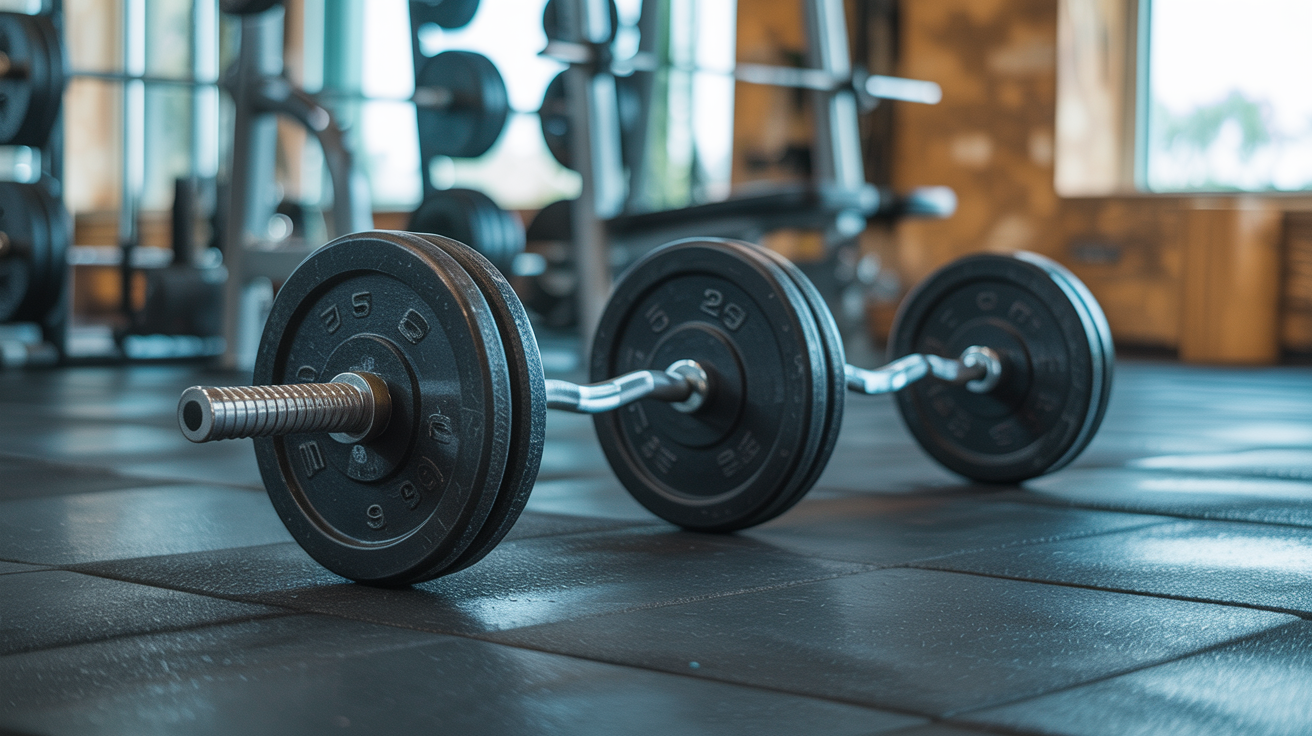
Walk into any gym and you will find two distinct worlds: a rack of barbells and dumbbells on one side, and a row of weight machines on the other. Both can build real strength, but they work differently and suit different situations. If you are brand new to lifting, understanding the basics of each will help you spend your time on equipment that actually matches where you are right now.
The short answer is that neither is universally better. Both free weights and machines have a place in a beginner program, and most people end up using some of each. What matters is knowing what each type does well so you can make a sensible choice on any given day.
What Free Weights Are and Why People Use Them
Free weights include anything that is not attached to a cable or a fixed path. Dumbbells, barbells, kettlebells, and even a loaded trap bar all count. The defining feature is that the weight moves freely in three dimensions, which means your muscles have to do extra work to stabilize it.
That stabilization demand is both the strength and the challenge of free weights. When you press a pair of dumbbells overhead, your shoulders, rotator cuff, core, and even your hips are all working together to keep the weight under control. Over time, that translates to functional strength that carries over to real-life movement.
Free weights are also flexible. A single set of adjustable dumbbells can cover dozens of exercises, and you can adjust the range of motion and angle to fit your body rather than fitting the machine. They are the default tool for the 5 basic strength movements every beginner should learn, from squats and deadlifts to rows and pressing patterns.
The downside is that free weights require you to learn technique before you load them up. A barbell squat has more moving parts than a leg press machine, and getting the form wrong under heavy load raises the injury risk. Starting light and building the pattern before adding weight is non-negotiable with free weights.
What Machines Are and Why People Use Them
Weight machines guide the movement along a fixed track. A lat pulldown, a chest press machine, a leg curl, a cable row, all of them keep the weight moving in a predetermined path so you have fewer variables to manage.
That constraint is genuinely useful for beginners. When you sit down at a chest press machine, you can focus almost entirely on the target muscle without worrying about balancing the bar or keeping your elbows in line. This makes it easier to feel what the exercise is supposed to feel like, which is valuable early on when you are still building your body awareness.
Machines are also lower-risk for solo training. If you push a chest press machine to failure, the weight stops at the safety stops. If you try the same thing under a loaded barbell without a spotter, the consequences are more serious. For that reason, machines can be a good option if you are training alone and want to push your effort a bit harder.
Cable machines sit somewhere between the two categories. The weight moves on a fixed path, but because cables allow you to pull from different angles they offer more variety than a single-purpose machine. Many beginners find cables easier to learn than free barbells while still teaching good movement patterns.
Key Differences That Actually Matter for Beginners
Stability demands. Free weights require your body to stabilize the load, which builds coordination and engages smaller supporting muscles. Machines remove most of that demand. Neither outcome is wrong, but they are different.
Learning curve. Machines have a lower initial skill barrier. You adjust the seat, pick a weight, and go. Free weight exercises like the deadlift or overhead press take more time to learn well. If you are in your first month of training, machines can let you build confidence and get a feel for progressive loading while you learn free weight patterns on the side.
Range of motion. Machines are built for average body proportions, and they do not always fit every user well. If the seat or pad does not suit your limb length, the movement path can feel awkward or put stress on joints at the wrong angle. Free weights adapt to you rather than the other way around.
Progressive overload. Both tools support progressive overload, the core principle of getting stronger over time. Machines typically increase in larger increments (often 10 to 20 lbs per stack plate), which can make small progress harder to track. Dumbbells also jump in 5-lb intervals, but you can use fractional plates or resistance bands to make smaller steps on barbells.
Carry-over to daily life. Because free weights require coordination and balance, the strength you build tends to transfer better to activities outside the gym. Machines build targeted muscle size and strength but in a more isolated way.
A Practical Approach for Beginners
Rather than picking a side, think about using both strategically. Here is a simple framework:
Start with machines or cables to learn what exercises should feel like and to build initial strength without a steep technique barrier. At the same time, practice the fundamental free weight patterns with very light loads, a broomstick, an empty bar, or light dumbbells, focusing entirely on form before adding weight.
As your coordination and body awareness improve over the first few months, gradually shift more of your program toward free weights while keeping machines for accessory work or days when you want a lower-stakes session. This mirrors what most good beginner programs do in practice.
Understanding sets and reps matters regardless of which equipment you use. Three to four sets of 8 to 12 reps is a solid starting range for most beginner exercises on both machines and free weights. Track your numbers so you can see progress week to week.
If you have access to only one or the other, you can still get strong. Many lifters have built significant strength with nothing but a barbell and plates. Plenty of others have made real progress using only machines. The tool matters less than showing up consistently and adding challenge over time.
One note on safety: if you have a pre-existing joint issue, past injury, or any health condition that affects your movement, speak with your doctor or a qualified physical therapist before starting a lifting program. They can guide you toward the exercises and equipment that make sense for your specific situation.
Frequently Asked Questions
Should beginners start with machines or free weights? Either can work. Machines have a lower technical barrier and are a reasonable starting point. Free weights build coordination alongside strength, but take longer to learn safely. Many beginners benefit from using both: machines to build early confidence, free weights to develop real movement patterns.
Are machines less effective than free weights? Not less effective overall, just different. Machines are effective at building muscle and strength in the target area. Free weights add a stabilization challenge that builds broader functional strength. Both are legitimate tools, and most well-rounded programs include some of each.
Can I build real muscle using only machines? Yes. Muscle growth depends on progressive overload, volume, and recovery, not on whether the weight is free or guided. Many people have built significant muscle training primarily on machines.
Why do free weights feel harder even at the same weight? The extra difficulty comes from stabilization. Your body is recruiting additional muscles to control the movement, which increases total muscular effort. Over time this builds coordination and joint stability that carries over to other activities.
How do I know if a machine fits me correctly? A properly fitted machine should allow you to move through a full, comfortable range of motion without joint pinching or awkward angles. Adjust the seat height, pad position, and back support before you load any weight. If a machine consistently feels wrong no matter how you adjust it, skip it and find an alternative exercise.