Mobility & Recovery
Foam Rolling for Beginners: What It Does (and What It Doesn't)
Learn how to use a foam roller, what self-myofascial release actually does for beginners, and what the research says it can't do.
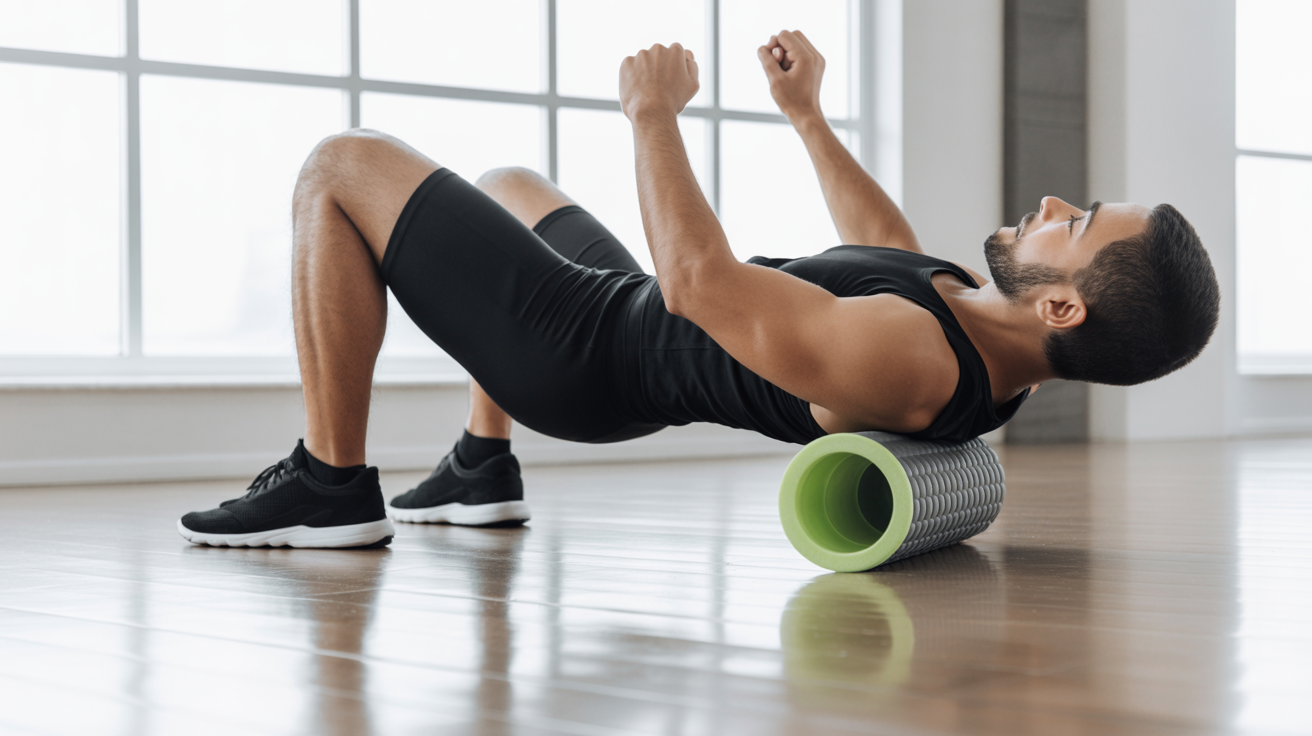
If you've watched anyone at a gym slowly rolling around on a foam cylinder and wondered what they're doing, or whether you should be doing it too, you're not alone. Foam rolling has become a standard part of many training routines, and it's easy to pick up cheaply. But it comes with a fair amount of overpromising, and beginners often come in with the wrong expectations.
This guide covers what foam rolling actually is, what the research suggests it can help with, and where it falls short, so you can decide whether it's worth adding to your routine.
What Foam Rolling Is (and the Basic Idea Behind It)
Foam rolling is a form of self-myofascial release. "Myofascial" refers to your muscles (myo) and the connective tissue that surrounds them (fascia). The idea is that by applying sustained pressure to specific areas, you can reduce tension, improve how the tissue moves, and temporarily increase range of motion.
You're essentially using your own bodyweight to apply pressure, with the foam roller acting as the tool. You position a muscle group on top of the roller and slowly work back and forth, pausing on spots that feel tight or tender. No machine, no trainer required.
The mechanism isn't fully settled in the research. Some theories point to changes in the nervous system (your body relaxing its tension response), while others focus on physical changes in the fascia itself. The practical takeaway is that it tends to feel useful, even if scientists are still working out exactly why.
If you're dealing with a specific injury, persistent pain, or any condition that affects your muscles or joints, check with your doctor or a physical therapist before starting. Foam rolling is generally low-risk, but it's not appropriate for all situations.
What Foam Rolling Actually Does
Here's where the evidence is reasonably solid for beginners:
It can improve short-term range of motion. Multiple studies have found that foam rolling before activity can temporarily increase flexibility, without the reduction in muscle output that static stretching sometimes causes. This makes it a reasonable addition to a warm-up before a workout, especially if you have areas that consistently feel stiff.
It may reduce delayed onset muscle soreness. Rolling after hard training sessions appears to reduce the perception of soreness in the days following a workout. If you're battling muscle soreness after training, adding 5 to 10 minutes of foam rolling to the end of your session is worth trying.
It can help with perceived tightness and tension. Regardless of the exact mechanism, most people report that rolling a tight muscle group leaves it feeling looser. For beginners who tend to carry a lot of tension in the hips, upper back, or calves, this can make training feel more comfortable.
It's quick and low-barrier. A foam roller costs under $30, takes up minimal space, and doesn't require a gym membership. For a recovery tool, those are meaningful advantages.
What Foam Rolling Does Not Do
This is where the overreach happens, so it's worth being direct:
It does not lengthen muscles permanently. Rolling can improve range of motion in the moment, but that effect fades within a short period. Long-term flexibility changes come from consistent stretching and mobility work over time. Foam rolling alone won't make you more flexible in any lasting way.
It does not break up scar tissue or "knots." The idea that you can physically crush or break apart adhesions with a foam roller is not well-supported by current research. The relief you feel is likely neurological, meaning your nervous system is responding to the pressure by relaxing the area, not a mechanical reshaping of tissue.
It is not a replacement for rest. A foam roller can support recovery, but it doesn't speed healing the same way actual rest does. If your body needs a day off, rolling won't make up for skipping that. Rest days are a real part of making progress, and no recovery tool changes that.
It will not fix a movement problem on its own. If your hips are stiff during squats, rolling your hip flexors might help temporarily, but the stiffness will keep coming back unless you also work on mobility exercises for your hips and shoulders and address the root cause.
How to Use a Foam Roller: Basic Technique for Beginners
You don't need a complicated protocol. A simple approach works well:
Choose the muscle group you want to work. Common areas for beginners include the calves, hamstrings, quads, IT band (outer thigh), upper back, and lats. Avoid rolling directly on your lower back or joints like the knee.
Position yourself on the roller. Place the target muscle on top of the roller and use your arms or other leg for support. You control how much pressure you apply by shifting your bodyweight.
Move slowly. Roll at roughly one inch per second. Fast rolling doesn't do much. You're looking for tight or tender spots.
Pause on tender areas. When you find a spot that feels tight, hold there for 20 to 30 seconds rather than rolling through it quickly. Breathe steadily. The discomfort should be manageable, not sharp.
Keep sessions short. Spending 30 to 60 seconds on each muscle group is enough. A full-body session can fit into 10 minutes.
If something feels sharp, causes a nerve sensation (tingling or shooting), or gets worse rather than better after a few seconds, move off that spot. Rolling should feel like productive pressure, not pain.
Foam Roller Before or After a Workout?
Both work, and they serve slightly different purposes.
Before training: Rolling before a session can help loosen up stiff areas and may improve range of motion for the movements you're about to do. Keep it brief, around 5 minutes, and focus on the areas relevant to that day's workout. This pairs well with deciding when to stretch, since the two have different effects and timings.
After training: This is where most of the soreness-reduction evidence applies. Rolling after a session, when your muscles are warm, tends to feel more comfortable and may help with next-day stiffness.
For most beginners, after training is the easier habit to build. You're already at the end of the session, the muscles are warm, and it serves as a natural wind-down. If you find yourself chronically stiff before workouts, adding a short pre-session roll to problem areas is a reasonable addition.
Frequently Asked Questions
Does foam rolling hurt?
It can be uncomfortable, especially on tight areas, but it shouldn't feel sharp or unbearable. The common phrase is "good pain," meaning it's the kind of pressure that feels productive. If the pain is intense, reduce your bodyweight on the roller. If it doesn't ease up in a few seconds, move off the area and check with a professional if that spot is consistently painful.
How often should I foam roll?
Daily rolling is fine for most people. Even a few minutes on the areas that tend to feel tight can be useful. There's no strong evidence that more is better, so you don't need to spend 30 minutes rolling every day.
What type of foam roller should I start with?
A standard density roller works well for beginners. High-density or ridged rollers are more intense and can be uncomfortable if you're new to it. Start with a smooth, medium-density roller and move up if you want more pressure later.
Can foam rolling replace stretching?
No, and it works better alongside stretching than as a substitute. Foam rolling addresses perceived tightness and short-term range of motion, while regular stretching builds lasting flexibility over time. Using both tends to give better results than relying on either alone.
Is foam rolling safe for everyone?
For most healthy adults starting a beginner training program, yes. But if you have a blood clotting condition, an active injury, osteoporosis, or nerve damage, check with your doctor first. Pregnant individuals should also consult a healthcare provider before adding foam rolling, particularly near the lower back and abdomen.