Mobility & Recovery
How Sleep Affects Your Strength and Recovery
Learn how sleep and muscle recovery are connected, why shortchanging sleep limits your gains, and simple habits that help you sleep better on training nights.
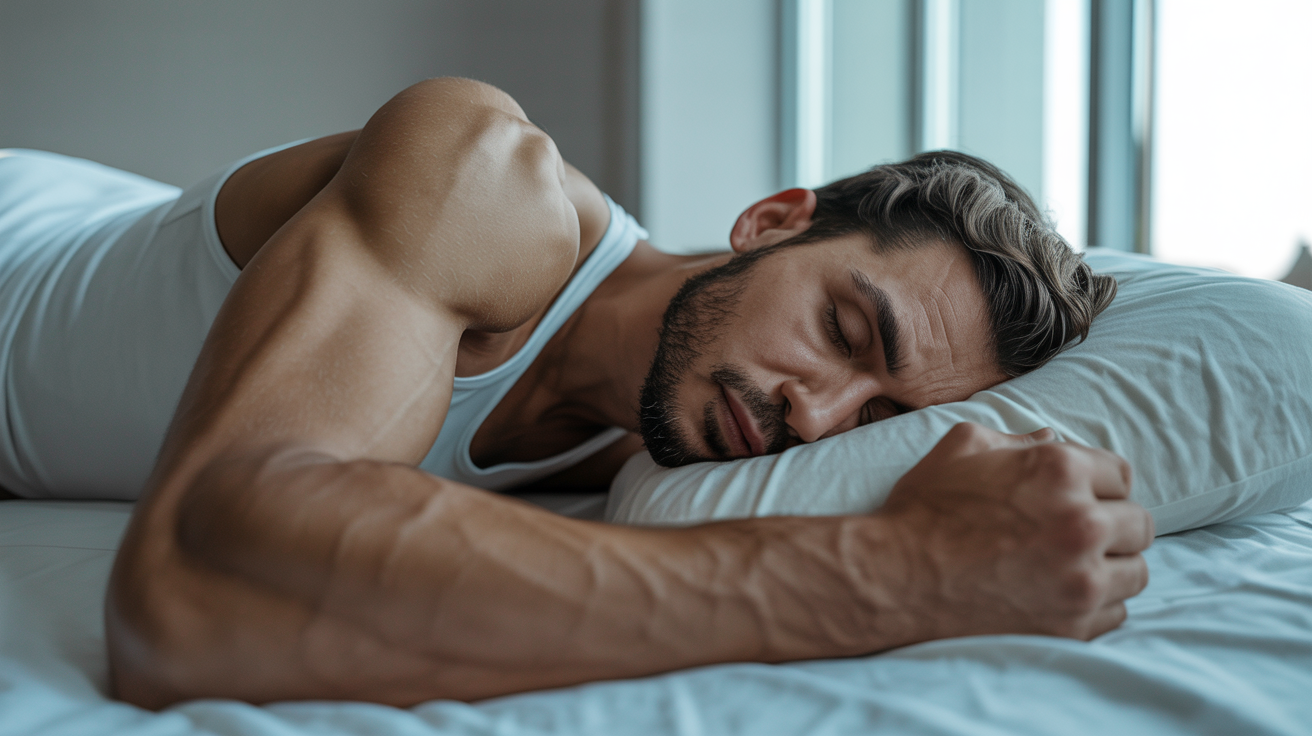
Most beginners spend a lot of energy thinking about which exercises to do and how many sets to run. Sleep barely gets a mention. But here is the thing: a training session creates the conditions for your muscles to grow stronger, while sleep is when a large portion of the actual repair and adaptation happens. Skip the work in the gym and you have nothing to build. Consistently cut your sleep short, and that work goes partly to waste.
This guide covers what actually happens during sleep that matters for strength, how poor sleep shows up in your training, and the habits that make the biggest practical difference. If you have any health conditions affecting your sleep, talking with your doctor before making big changes is always the right call.
What Happens to Your Body While You Sleep
Sleep is not one long pause. It cycles through lighter and deeper stages roughly every 90 minutes, and the deeper stages are the ones most relevant to strength and recovery.
During slow-wave sleep (sometimes called deep sleep), the body releases a significant portion of its daily growth hormone. Growth hormone signals muscle tissue to take up amino acids and begin repair. This is also when your nervous system consolidates the motor patterns you practiced during the training session, which is part of why a new movement can feel more coordinated the day after you learned it.
During REM sleep, the brain processes the stress load from training and regulates hormones like cortisol. Chronically elevated cortisol works against muscle building and can make it harder to recover between sessions.
Getting fewer hours of sleep cuts the time your body spends in both stages. Sleeping in noisy or bright environments can fragment sleep and reduce how much deep sleep you actually accumulate, even if the total hours look acceptable on paper.
How Poor Sleep Shows Up in the Gym
You may notice the effects of a bad night before you ever pick up a weight. Reaction time slows, focus narrows, and your perceived effort goes up, meaning a weight that normally feels manageable can feel genuinely heavy. That is not weakness; that is your nervous system running at reduced capacity.
Over multiple nights of short sleep, the compounding effects become more visible:
- Strength on compound lifts tends to drop.
- Reps that were previously comfortable start feeling like maximum effort.
- Soreness lingers longer than usual.
- Motivation to train often dips, which makes it easier to skip sessions.
These are all signs that recovery is not keeping pace with the training stress you are putting in. The answer is not always to train harder or eat more protein; sometimes the gap is simply sleep.
If you are new to strength training, understanding how rest days fit into your program can help you see the full picture of what recovery actually involves.
How Much Sleep Do You Actually Need
General guidance from sleep researchers points to seven to nine hours for most adults, but individual needs vary. Some people function well at the lower end; others genuinely need closer to nine hours to feel fully recovered.
A few signs you are getting enough for your training:
- You wake up without an alarm most mornings feeling reasonably refreshed.
- You can get through a training session without a mid-workout energy crash.
- Muscle soreness from a session clears within the expected window (usually 24 to 72 hours for most beginners).
If you are consistently hitting six hours or fewer and you are also struggling in your training, adding sleep is worth treating as seriously as adding protein or adjusting your program. That said, if you have persistent trouble sleeping regardless of how long you are in bed, a conversation with a doctor or sleep specialist is worth having.
Practical Habits That Improve Sleep Quality
You do not need to overhaul your entire life to sleep better. A handful of consistent habits tend to make the biggest difference.
Keep a consistent wake time. Your body's internal clock is set largely by the time you get up, not the time you go to bed. Waking at the same hour every day, including weekends, stabilizes the cycle and makes it easier to fall asleep at night.
Wind down before bed. Your nervous system takes time to shift out of alert mode. Finishing a hard training session late at night, then immediately lying down, makes it harder to fall asleep. A rough rule: finish intense training at least two to three hours before your target bedtime. A light walk or mobility work is fine later in the evening.
Limit bright light in the evening. Light, especially the blue-spectrum light from phones and screens, suppresses melatonin and delays sleep onset. Dimming screens or using a blue-light filter in the hour before bed can help. This is one of the cheaper changes to make, and the impact is real for many people.
Keep the room cool and dark. Body temperature needs to drop slightly for sleep to begin and deepen. A cooler room helps that process. Blackout curtains or a sleep mask can be worthwhile if you have light coming in from outside.
Watch alcohol close to bedtime. Alcohol can help you fall asleep faster but fragments the second half of the night and suppresses REM sleep, which matters for recovery and mood. If you drink, giving yourself a few hours between drinking and sleeping makes a difference.
Pairing better sleep with a proper warm-up before your workouts and paying attention to how you feel after sessions gives you a clearer picture of how your overall recovery is tracking.
Sleep and Muscle Soreness
One frustrating cycle for beginners: you train, you are sore, soreness makes it harder to sleep comfortably, and then the poor sleep slows your recovery from the soreness. Breaking that cycle usually means addressing both sides.
For the soreness itself, staying gently active (light walks, easy movement) tends to help more than total rest. For the sleep side, making sure you are not going to bed already stressed or overstimulated can shorten how long soreness lingers.
If you are new to managing soreness, there is a full breakdown of what causes it and what actually helps in the guide on dealing with muscle soreness (DOMS).
One thing to be aware of: feeling very sore or stiff can sometimes be a sign you took on more training volume than you were ready for, not just a sleep problem. Both factors are usually worth looking at together.
Frequently Asked Questions
Does it matter what time I go to sleep, or just how many hours I get? Total hours matter a lot, but timing has some effect too. Sleep that starts earlier in the night tends to include more slow-wave (deep) sleep, while sleep in the early morning hours contains more REM. Getting your hours during a consistent window that works with your schedule is more important than hitting a specific bedtime, but if you have flexibility, earlier tends to be slightly better for physical recovery.
Will one bad night of sleep ruin my gains? One rough night is not going to undo weeks of consistent training. The problems tend to build when short sleep becomes the norm over several days or weeks. If you slept poorly before a planned training session, you can still train; just manage your expectations on performance that day and go a little lighter if needed.
Can naps substitute for lost night sleep? A short nap (around 20 minutes) can help with alertness and reduce the performance dip from a poor night, but it does not fully replace the hormonal benefits of a complete night's sleep. Naps over 30 minutes can also cause grogginess and disrupt your ability to fall asleep at night. Useful as a supplement; not a replacement.
I sleep eight hours but still feel tired. What is going on? Time in bed and actual sleep quality are different things. If you are sleeping eight hours but still feel unrested, it may be worth looking at sleep quality factors: room temperature, noise, light, alcohol, or the possibility of a sleep disorder like sleep apnea. A doctor can help sort out what is actually happening.
Should I train if I am sleep-deprived? Light to moderate training on a bad night is generally fine and can actually improve mood. Pushing for maximum effort or heavy personal records when sleep-deprived carries a higher injury risk because coordination and reaction time are both reduced. Save your hardest sessions for days when you are well-rested.